
I. Origins and Technical Evolution
In the 1920s, the Red Army urgently required a heavy machine gun capable of countering low-flying aircraft. Initial prototypes developed in 1925 based on the German Dreyse design proved unreliable. The breakthrough came in 1930 when Vasily Degtyaryov scaled up his DP-27 light machine gun to create the DK (Degtyaryov Krupnokaliberny), chambered in 12.7×108mm. However, its 30-round drum magazine limited practical rate of fire to 80 rounds per minute.
Georgy Shpagin (designer of the PPSh-41) revolutionized the design in 1938 by introducing a rotary drum belt feed mechanism, boosting theoretical cyclic rate to 600 RPM. The upgraded DShK-38 entered mass production in 1939, with its name derived from the designers’ initials (Degtyaryov-Shpagin Krupnokaliberny). By 1944, 8,440 DShKs were deployed, becoming vital for both anti-aircraft and anti-armor roles.
II. Engineering Innovations
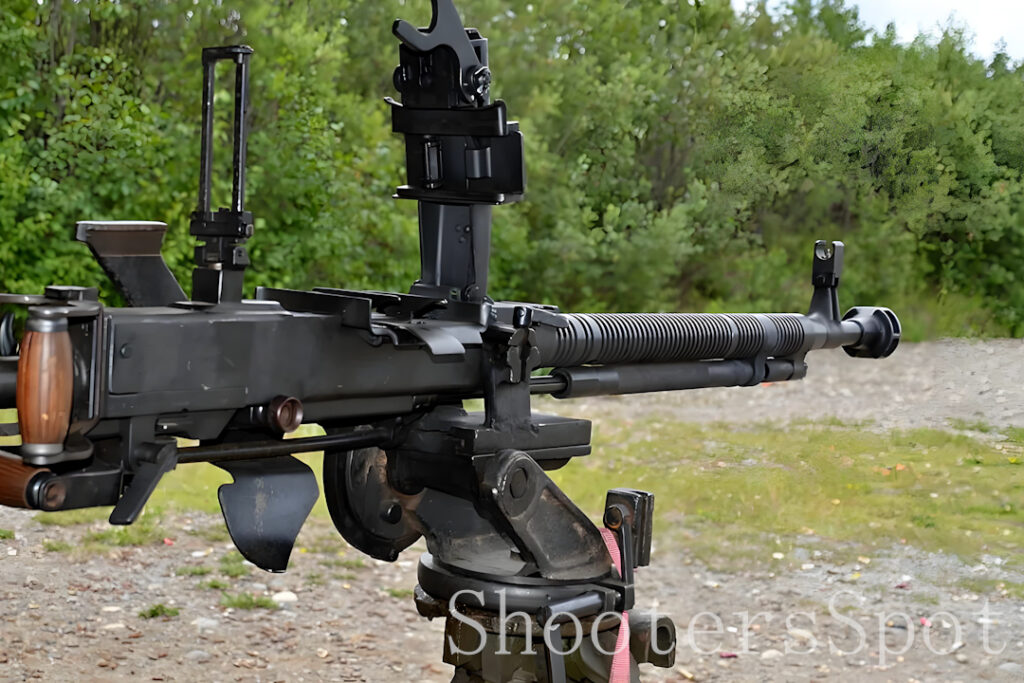
The DShK featured groundbreaking designs:
- Thermal Management: Radial cooling fins and multi-chamber muzzle booster enabled sustained 500-round bursts
- Gas Regulation: Three adjustable gas ports (3/4/5mm) accommodated varying environmental conditions
- Multirole Mount: The 102kg Sokolov wheeled mount converted into AA tripod in 60 seconds, with 450mm low profile for ground fire
- Ballistic Superiority: 12.7×108mm rounds achieved 860m/s muzzle velocity, penetrating 15mm armor at 500m with 3,500m effective range
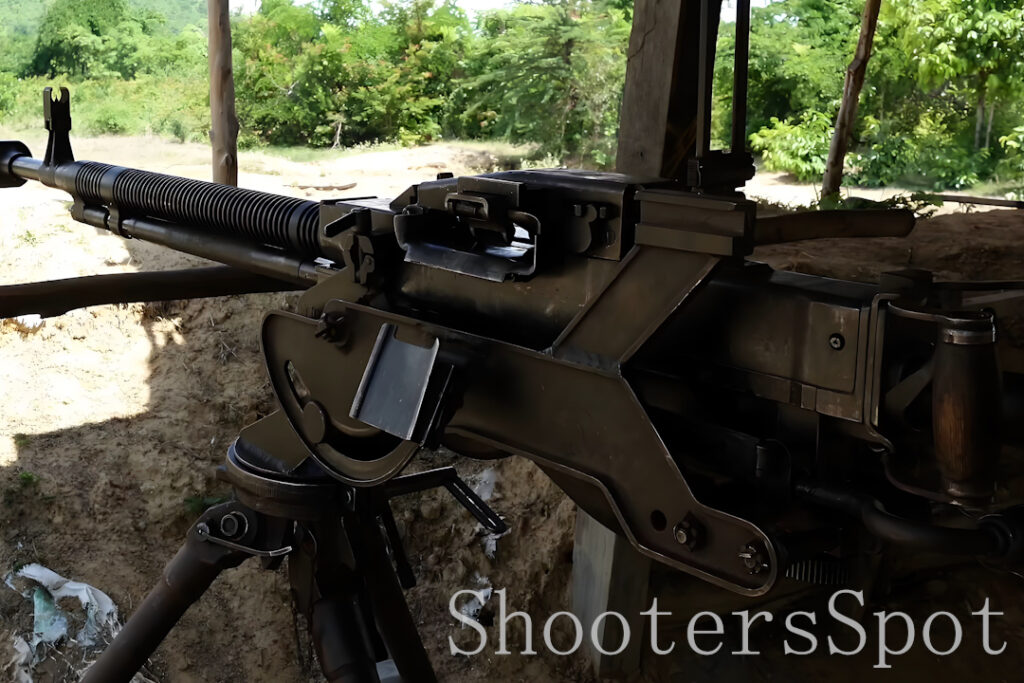
The 1946 DShKM upgrade introduced:
- RP-46-style reciprocating feed mechanism reducing jams by 40%
- Quick-change barrel with 10,000-round lifespan
- Squared receiver cover as visual identification feature
III. Combat Legacy
DShK series reshaped modern warfare:
- During Moscow Defense, 1075th Rifle Division destroyed 12 Luftwaffe bombers
- IS-2 tanks mounted DShKs suppressed Panzerfaust teams at Kursk
- 250 prototype DShKMs neutralized 138 strongpoints in Berlin (1945)
Cold War proliferation saw over 1 million units exported:
- Chinese Type 54 clones achieved 17.3% kill rate against US aircraft in Korea
- Viet Minh DShKMs downed 62 French transports at Dien Bien Phu
- Technicals-mounted DShKMs remain feared in Middle East conflicts
IV. Modern Adaptations
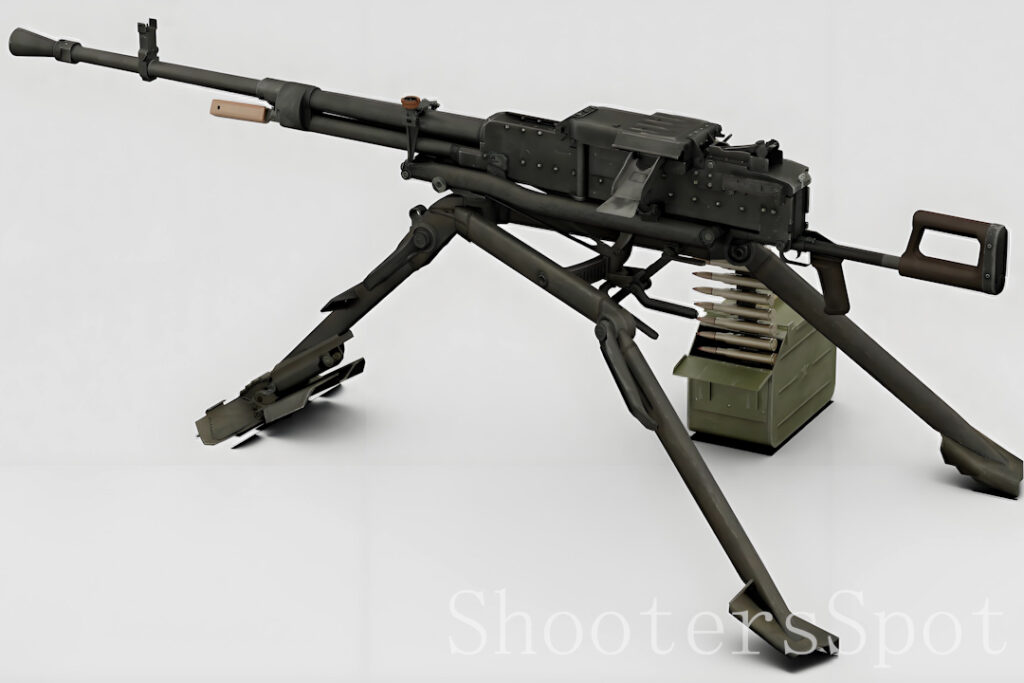
Despite NSV replacement in 1970s, DShKM persists:
- Russian T-90s retain DShKM as emergency armament
- Ukrainian DShKM-TK variants achieve sniper-grade accuracy with optics
- African double-mounted configurations reach 1,200 RPM
Comparative advantages over M2HB:

V. Conclusion
From Stalingrad’s ruins to Syrian deserts, the DShK series’ 85-year service history demonstrates how brilliant engineering transcends technological generations. This Soviet masterpiece continues writing its legend in fire and steel.

