1. Historical Background and Development
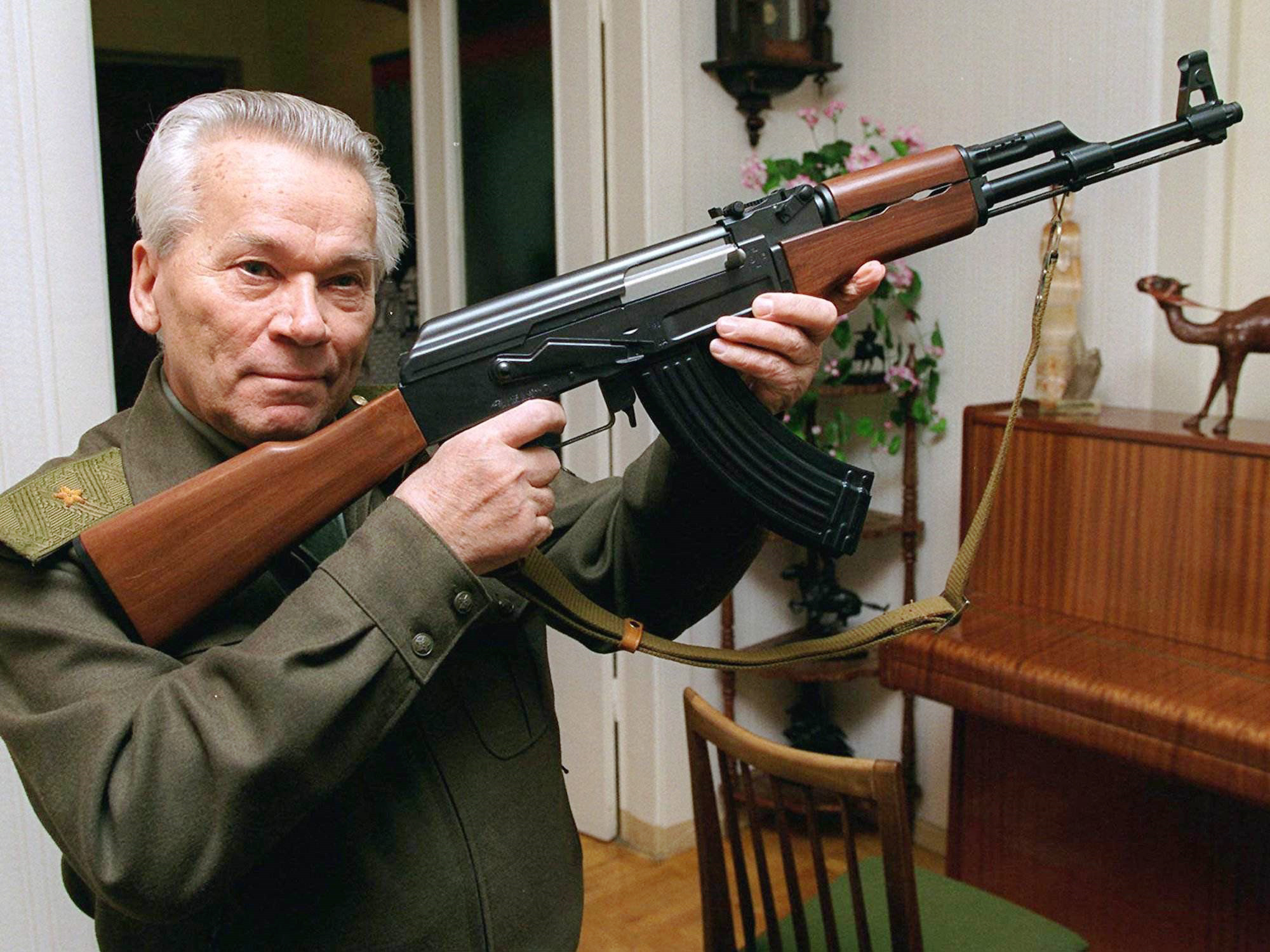
The AK-47 (Автомат Калашникова образца 1947 года), designed by Soviet engineer Mikhail Kalashnikov, was finalized in 1947 and officially adopted by the Soviet Army in 19491614. Its development stemmed from the USSR’s post-WWII need for a versatile infantry weapon that combined the range of a rifle with the firepower of a submachine gun. Kalashnikov drew inspiration from the rotating bolt system of the American M1 Garand and the intermediate cartridge concept of the German StG44613. During rigorous trials, the prototype AK-46 demonstrated unmatched reliability: it functioned flawlessly after being buried in mud, submerged in water, or dropped from heights. Even after firing 15,000 rounds consecutively—causing the barrel to glow red—it showed no signs of malfunction, outperforming all competitors
2. Design Innovations and Technical Features
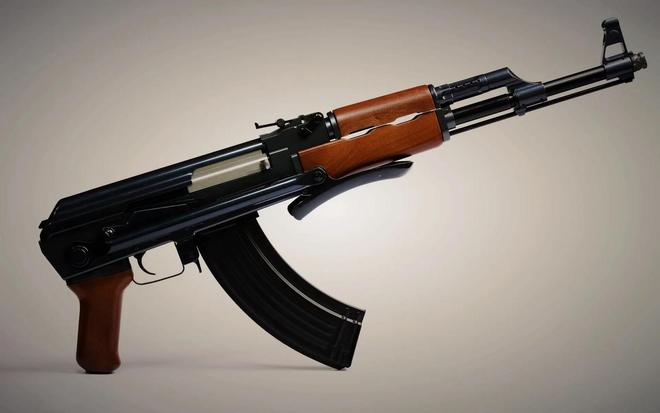
- Mechanical Design
- Gas-Operated System: Propellant gases diverted through a port drive a piston to cycle the bolt, ensuring simplicity and low failure rates1613.
- Rotating Bolt: A 35-degree clockwise rotating bolt with dual locking lugs provided secure closure16.
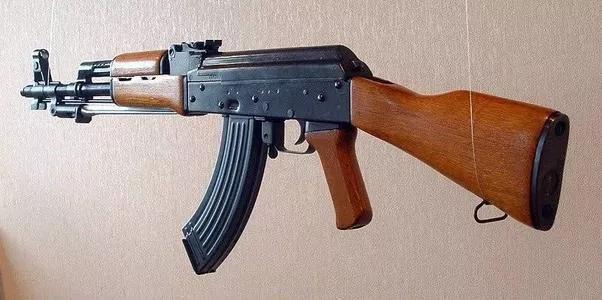
- Stamped Construction: Early models (Type 1) used stamped steel receivers, reducing production costs and time14.
- Ammunition and Performance
- Chambered for the 7.62×39mm M43 intermediate cartridge, it balanced recoil and stopping power, with an effective range of 300 meters (full-auto) to 400 meters (semi-auto)1611.
- A cyclic rate of 600 rounds per minute, fed by 30-round curved magazines, and a weight of 4.3 kg (unloaded) made it ideal for close-quarters combat61113.
- Environmental Adaptability
The AK-47’s legendary durability allowed it to function in deserts, jungles, and sub-zero conditions. Chromed barrels and sealed components resisted corrosion, requiring minimal maintenance
3. Strengths and Limitations
- Advantages
- Reliability: Functioned even when clogged with dirt or sand, outperforming contemporaries in harsh conditions1612.
- Ease of Use: Simple disassembly and maintenance required minimal training, ideal for mass conscription armies3514.
- Low Cost: Stamped manufacturing and standardized parts kept production costs at one-third of comparable rifles36.
- Drawbacks
- Accuracy Issues: Severe muzzle climb during full-auto fire and significant bullet dispersion beyond 300 meters149.
- Ergonomic Flaws: Short sight radius and distant ejection (nearly 2 meters) compromised stealth1912.
- Ammunition Constraints: The M43 round’s unstable trajectory limited long-range effectiveness in modern combat
4. Global Impact and Cultural Legacy
With over 100 million units produced, the AK-47 became the most widespread firearm of the 20th century, used by militaries and insurgents in over 50 countries
Key variants include:
AKM (1959): Lightened with a milled receiver and muzzle compensator4814.
AK-74: Transitioned to 5.45×39mm ammunition for improved accuracy
Culturally, the AK-47 symbolizes resistance and revolution. It appears on Mozambique’s flag alongside a hoe and book, while Hezbollah’s emblem features a fist gripping the rifle. In pop culture, from Lord of War to Counter-Strike, it remains an icon of raw power

5. Controversy and Reflection
Despite its acclaim, the AK-47’s proliferation has fueled conflicts. An estimated 20 million deaths are attributed to it, and its affordability made it a tool for terrorists and child soldiers. Kalashnikov himself lamented in his later years: “I wish I had invented a lawnmower instead