
I. Historical Context: From Technological Innovation to War Symbol
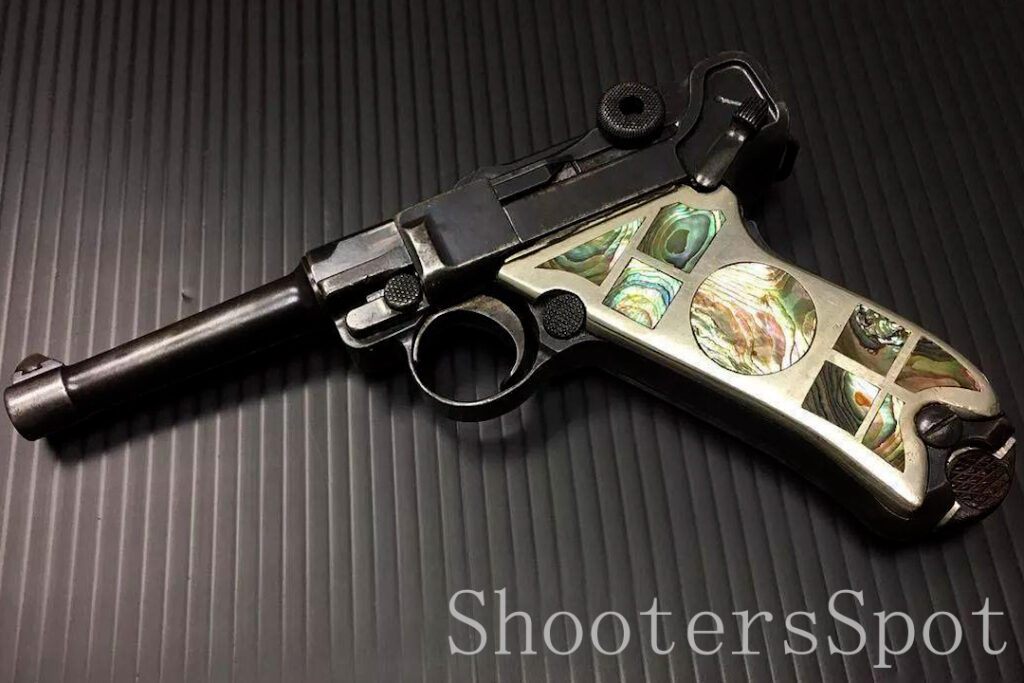
The birth of the Luger P08 marked the formal entry of semi-automatic pistols into military history. In 1900, German engineer Georg Luger revolutionized firearm design by improving Hugo Borchardt’s C93 pistol with the groundbreaking Toggle-Lock Mechanism, solving recoil control challenges and creating the world’s first standardized military semi-automatic pistol. Adopted by the German Army in 1908 and named “Parabellum 08″—where “P” signifies both “Pistole” (pistol) and the Latin motto “Si vis pacem, para bellum” (If you want peace, prepare for war).
This breakthrough responded to late 19th-century military demands. While revolvers lacked sustained firepower and early semi-automatics suffered reliability issues, the Luger P08’s innovative locking system prevailed in 1904 German Navy trials. It became an “insignia of status” for German officers, with over 2.05 million units produced between 1908-1942, enduring two world wars.
II. Technological Revolution: Peak of Precision Engineering
- Toggle-Lock System
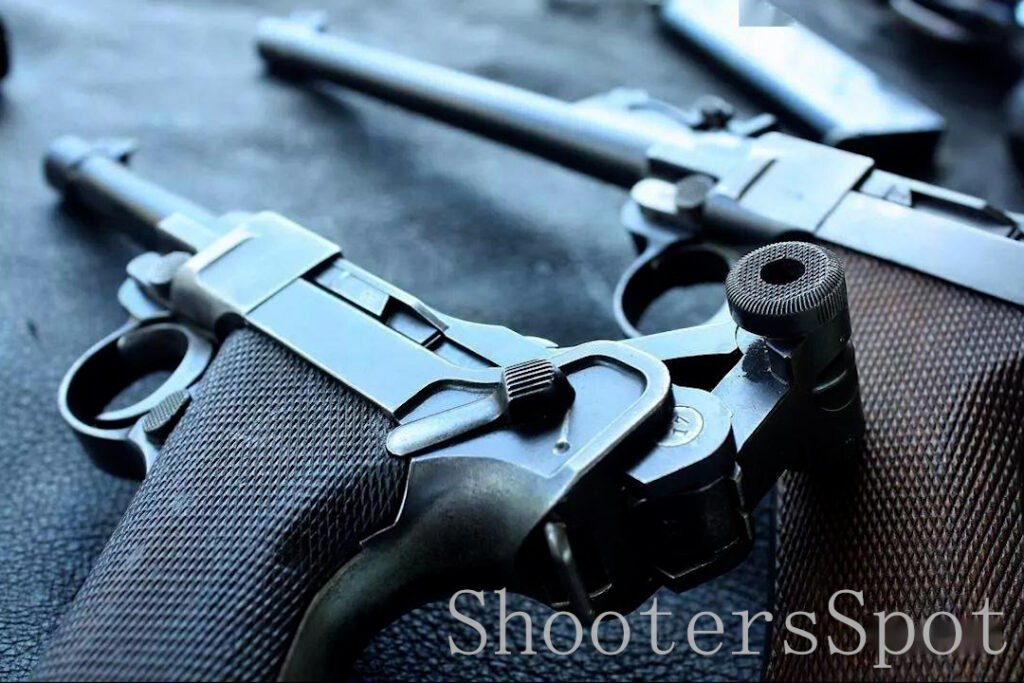
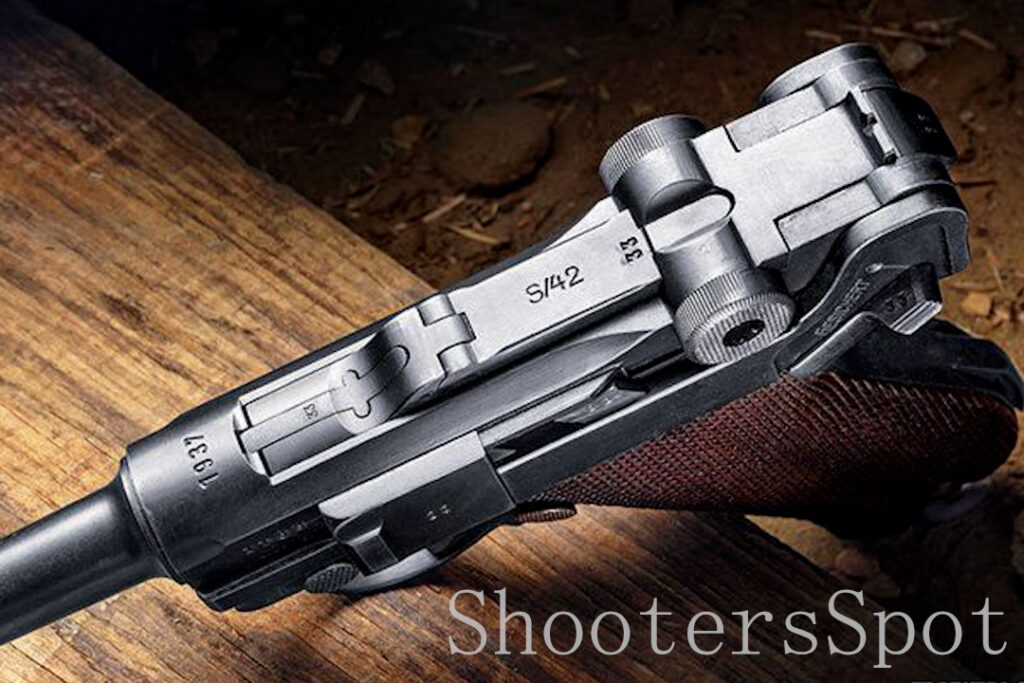
Inspired by Maxim machine guns and Winchester lever-action rifles, this elbow-joint mechanism mimics human anatomy: straightening to withstand chamber pressure, then bending to eject shells. This design directs 70% of recoil energy into the palm, reducing muzzle flip by 50%. With 200+ components machined to 0.02mm tolerance, it remains a marvel of micro-engineering. - Ergonomics Masterpiece
- 120° Grip Angle: Natural target alignment biomechanically optimized
- 196mm Sight Radius: V-notch rear sight and blade front sight enhanced accuracy by 30%
- Modular Design: Pioneered detachable 8-round magazines and 32-round drums for artillery models
3.Ammunition Legacy
The 9×19mm Parabellum cartridge, designed specifically for the P08, achieves 350-400m/s muzzle velocity and penetrates 3mm steel at 200m. It became NATO’s standard, with global production exceeding 10 billion rounds.
III. Model Genealogy: From Trenches to Display Cases
1.Military Variants
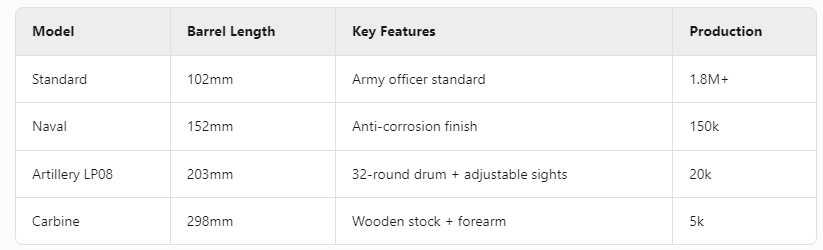
The Artillery model, hailed as the “Rolls-Royce of pistols,” fetched €470,000 at a 2019 auction for a pristine specimen.
2.Special Editions
- Night Combat: Integrated xenon illuminator, pioneering tactical accessories
- Gilded Ceremonial: Awarded to Nazi generals with eagle insignia and oak leaf engravings
- .45ACP Prototype: Only 2 exist for 1907 U.S. trials, one sold for $494,500 in 2010
IV. War Epic & Cultural Icon
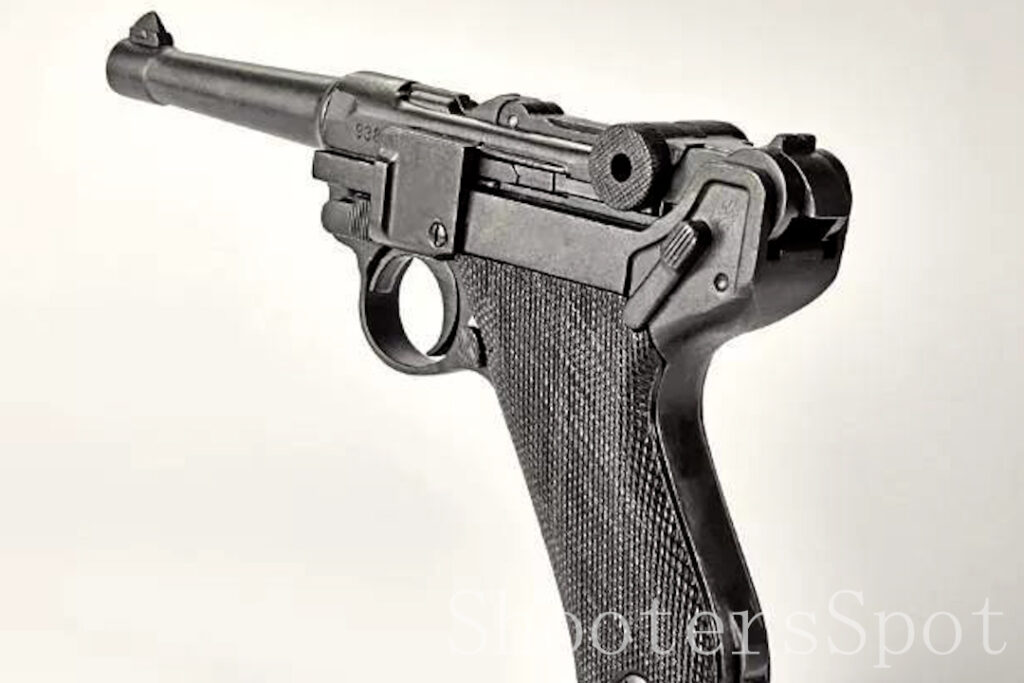
In WWI trenches, artillery models with 32-round drums functioned as “mobile machine guns,” enabling German stormtroopers to breach Allied lines. During WWII, though gradually replaced by Walther P38, the Luger remained an officer’s pride—GIs traded 20 Swiss watches for a single captured P08.
Its cultural imprint extends to pop culture:
- Backup weapon for Daisuke Jigen in Lupin III
- Band of Brothers episode where a soldier dies from negligent discharge
- “P08” tactical doll in Girls’ Frontline
- Japan’s Nambu Type 14 pistol as the “Eastern Luger”
V. Industrial Heritage & Modern Legacy
Despite discontinuation in 1942 due to complex construction (double P38’s cost), the Luger P08’s influence persists:
- Manufacturing Craft: Bluing treatment improved corrosion resistance by 300%, still used in premium firearms
- Ergonomic Philosophy: 120° grip theory inspired Glock series development
- Standardization Pioneer: Catalyzed NATO ammunition protocols
As historian Hans Schneider noted: “Disassembling a Luger P08 is like deconstructing a sonnet—each component annotates mechanical poetry.” In an era of polymer-framed guns, the Luger P08 stands at the intersection of mechanical artistry and war mythology, its steel components whispering tales of precision engineering and human destiny.

