I. Design Background and Nomenclature
The Mauser HSc (Hahn-Selbstspanner Pistole Ausführung C) was developed in the late 1930s by Mauser Werke as a response to the commercial success of Walther’s PP/PPK series. Facing intense competition, Mauser integrated innovative features into its existing M1914/M1934 pistol platform, finalizing the HSc prototype in 1938 and commencing production in December 1940.
The nomenclature “HSc” derives from:
H (Hahn Selbstspanner): Self-cocking hammer (double-action trigger)
S (Selbstspanner): Double-action functionality
C: Denoting the third iteration of Mauser’s exposed-hammer pistols (preceded by the C96 “Broomhandle” and Nickl M1922).
II. Structural Innovations and Technical Features
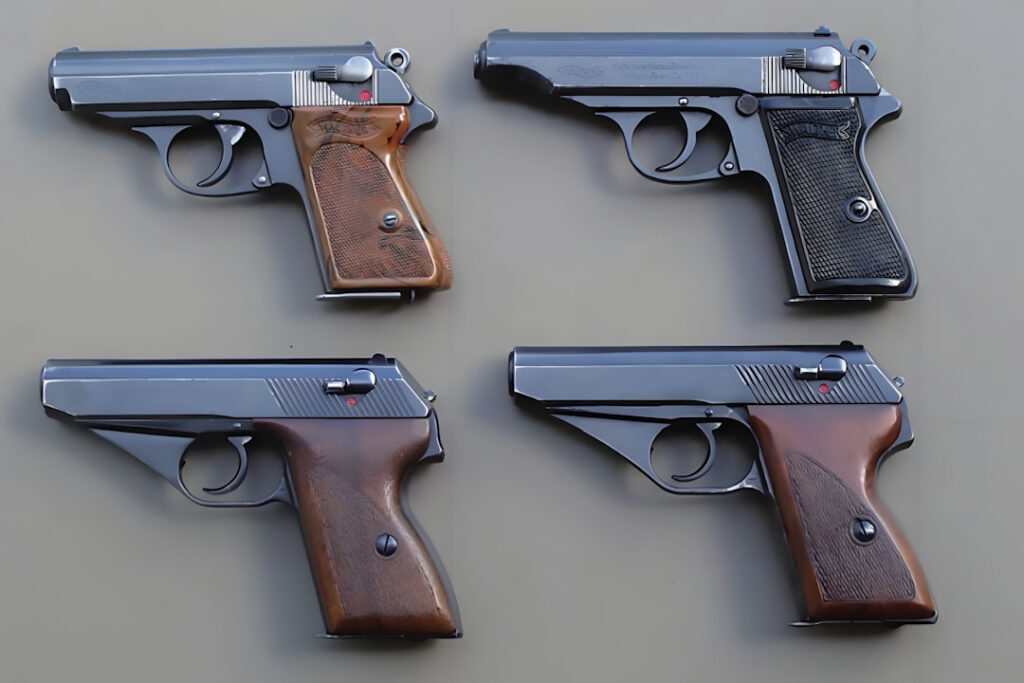
Compact and Streamlined Profile
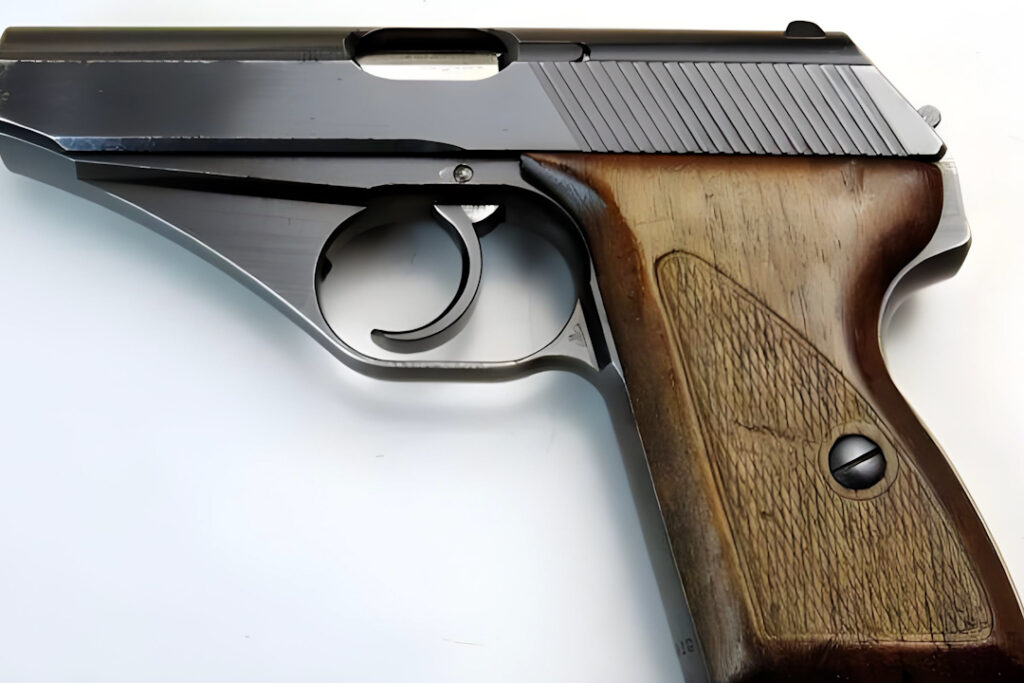
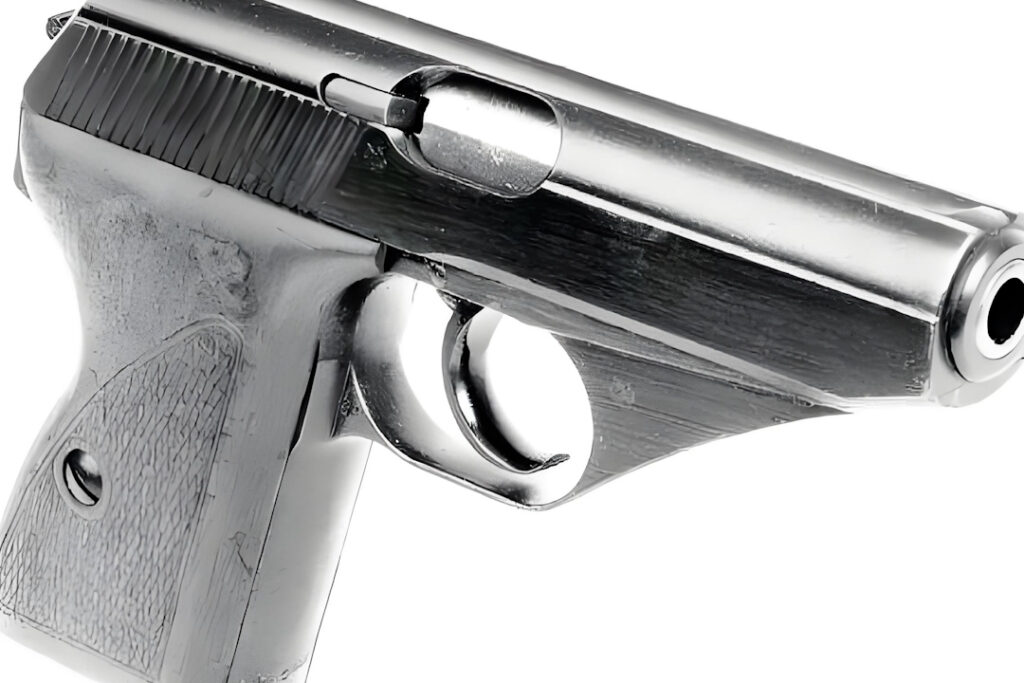
With an overall length of 165 mm, unloaded weight of 596 g, and an 86 mm barrel, the HSc chambered the 7.65×17mm Browning (.32 ACP) cartridge, fed by an 8-round magazine. Its triangular-slide design minimized snagging risks while enhancing grip stability. Low-profile sights with anti-glare serrations further optimized concealment.
Double-Action Mechanism and Safety
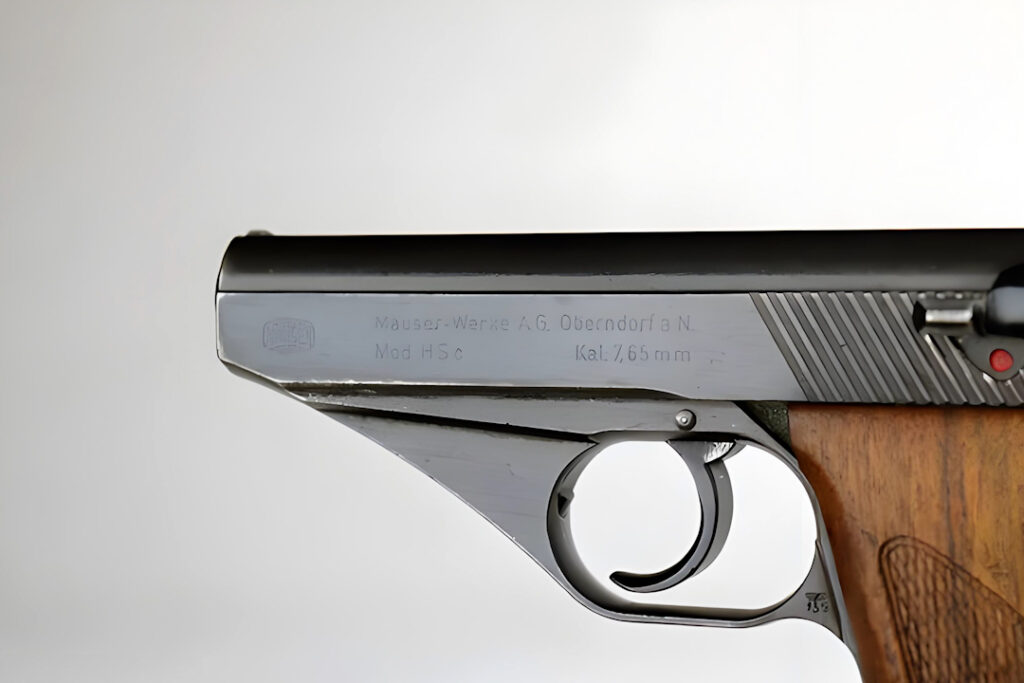
The HSc employed a blowback operation, with a partially concealed hammer to prevent clothing entanglement. A manual safety lever on the left slide featured two positions: upward (red dot exposed, fire-ready) and downward (“S” marked, firing pin blocked). Unlike Walther’s PP series, the HSc’s safety did not decock the hammer, requiring a secondary trigger pull for safe hammer release.
Modular Maintenance
takedown lever inside the trigger guard enabled rapid disassembly of the slide and barrel. The “European-style” magazine release at the grip base prioritized accident prevention over reload speed. The magazine included seven round-counting holes and a slide-lock function upon depletion.
III. Wartime Production and Military Deployment
Service in Nazi Germany
The initial batch of 1,345 HSc pistols (serial numbers 700001-701345) delivered to the Kriegsmarine in 1941 bore eagle/”M” markings on their grips. Subsequent variants included:
Wehrmacht: Eagle/”WaA135″ inspection stamps
Police: “L” or “F” markings
Commercial: Eagle/”N” engravings
Total wartime production reached 251,939 units, with 24% being commercial models. Wartime austerity measures replaced walnut grips with black plastic and downgraded finishes from blued to phosphated gray.
Absence in Pre-1949 China
Despite Mauser’s historical dominance in Chinese arms imports, the HSc never penetrated this market. Nazi Germany severed military ties with the Nationalist government in 1938, and HSc production began only in 1940, with commercial sales delayed until 1941.
IV. Postwar Legacy and Collectibility
French Occupation and Italian Licensing
From 1945-1946, Mauser produced limited HSc batches for French forces, some deployed in Algeria and Vietnam. West Germany revived production from 1968-1977, introducing 9×17mm (.380 ACP) versions before transferring rights to Italy’s Renato Gamba for the HSc Super 80.
Collector Market Dynamics
Pristine wartime HSc pistols now fetch 700-1,500. A 1943-made specimen with 97% original finish was listed at $1,095 in a 2021 U.S. auction. Early Kriegsmarine models (serial 700k range) command premium prices due to rarity.
V. Historical Significance and Cultural Impact
The HSc epitomized wartime German engineering pragmatism:
Design Philosophy: Balancing concealment, safety, and mass-production efficiency
Technical Legacy: Modular takedown influenced postwar compact pistols
Cultural Icon: Symbolized Nazi officer status and remains a cinematic staple
Though overshadowed by the Walther PPK in performance, the HSc’s sleek aesthetics and mechanical precision endure as a testament to interwar firearms craftsmanship.