I. Disruptive Birth: The Plastic Frame’s Triumph
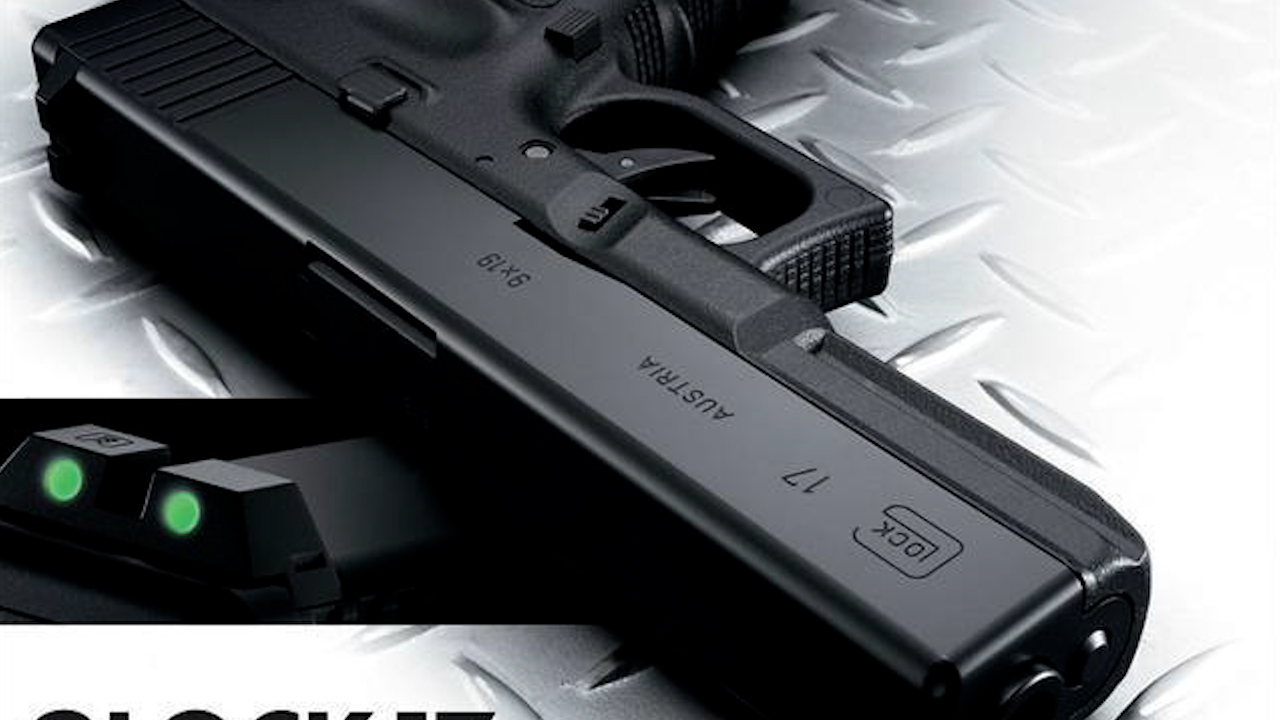
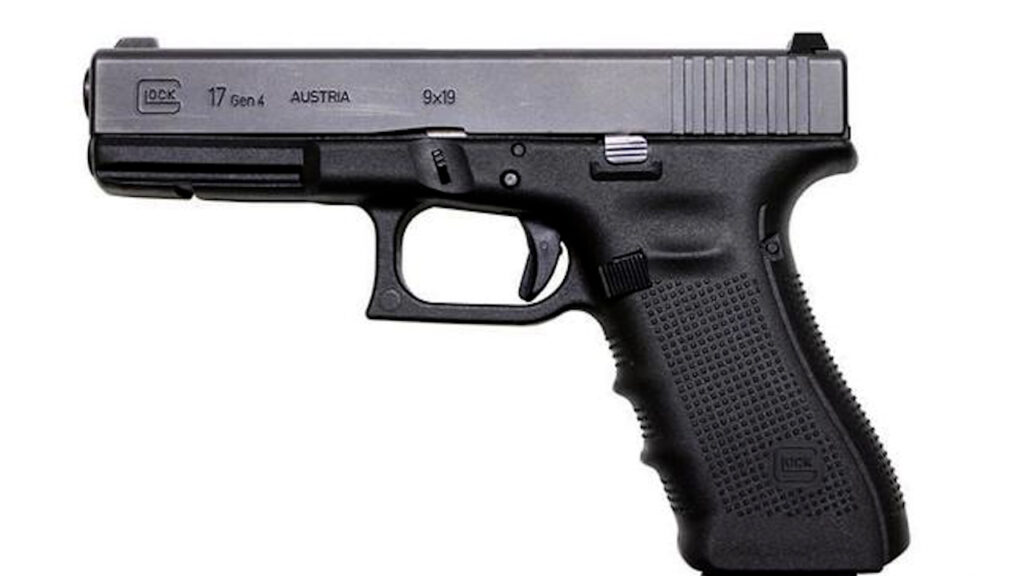
In 1983, Austria’s Glock GmbH stunned the firearms world with the Glock 17—a pistol featuring 62% polymer components. Its name honored the company’s 17th patent while nodding to its 17-round high-capacity magazine (exceeding the era’s standard 15 rounds). Designed to replace WWII-era Walther P38s for the Austrian Army, Glock pioneered polyoxymethylene engineering plastic for critical parts like the frame and magazine, slashing unloaded weight to 620g—30% lighter than steel counterparts.
During brutal military trials, it demonstrated unmatched reliability:
Functional after being run over by a 10-ton military truck
<0.3% failure rate in seawater immersion, sand burial, and -40℃ freezing tests
Validated for emergency underwater use by combat divers (unofficial but practical),Adopted as the P80 by Austria in 1983, it ignited the polymer pistol revolution.
II. Engineering Revolution: Three Radical Innovations
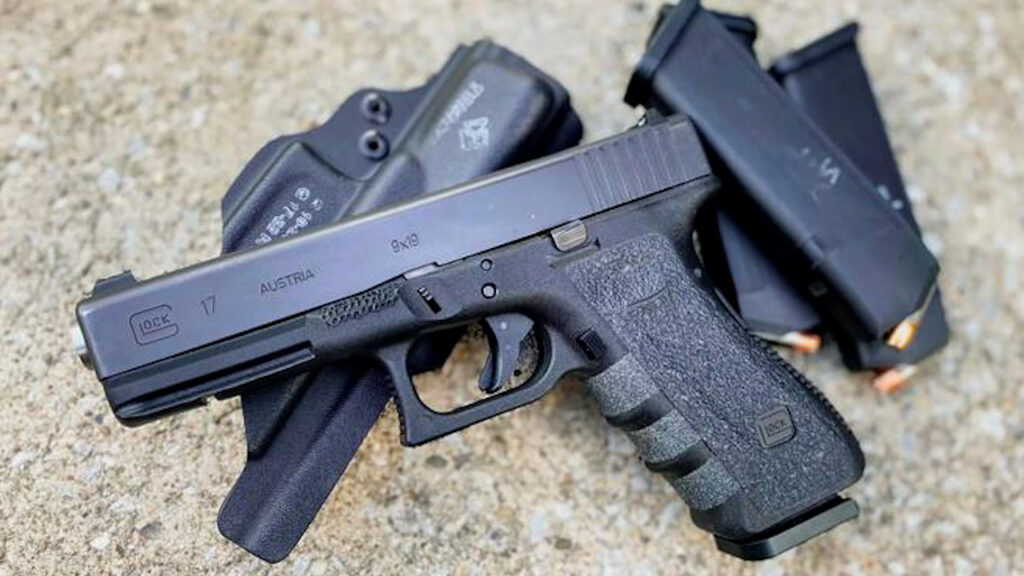
Polymer Frame: Lightweight & Corrosion-Resistant
Frame and magazine among 32 components injection-molded with impact-resistant polymer
Seamless design resisted mud intrusion, passed 500+ hour salt spray tests
120° grip angle matched natural wrist alignment, reducing muzzle flip by 25% “Safe Action” Trigger System
Safety Type Mechanism Protection Scenario
Trigger Safety Dual-lever blocks until fully depressed Prevents accidental discharge
Firing Pin Safety Physically blocks pin until trigger pull Prevents drop fires
Drop Safety Cruciform sear locks trigger bar Survives 3-meter falls
This system enabled “draw-and-shoot” responsiveness, boosting US police hit rates by 20%.
Modular Evolution: Five Generations
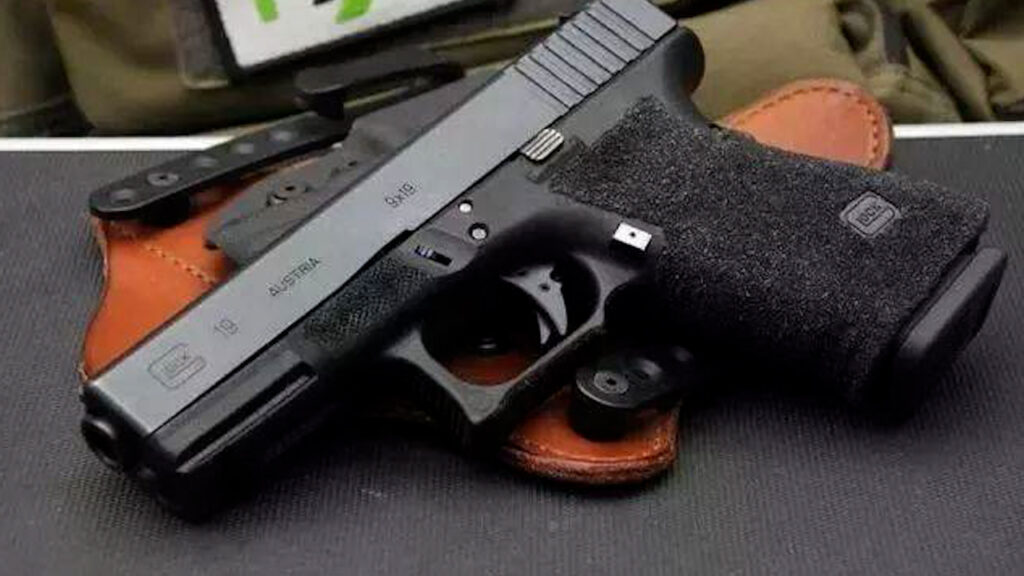
Gen3 (1999): Added rail interface, textured grip
Gen4 (2010): Swappable backstraps, ambidextrous mag release
Gen5 (2017): Finger groove-free grip + nDLC-coated barrel, 100,000+ round lifespan
III. Dominance on Battlefield and Streets
Law Enforcement Supremacy
Equips 60% of US police; standard issue for Philippine National Police
NYPD trials: 1/5,000 malfunction rate—3x better than Beretta 92F
Legendary Military Variants
Model Features Specialized Role
G17C Ported barrel cuts recoil 40% SWAT entry teams
G17L 153mm match-grade barrel IPSC competition
G18 Full-auto (1,200 rpm) Covert protection detail
G17 MOS Optic-ready slide cut Counter-terror CQB
Afghanistan: 200+ rounds fired in sandstorms without failure
Brazil drug raid: Fired after 3 weeks submerged in sewage
IV. Cultural Icon: From Silver Screen to Dark Web
Pop Culture Symbol
Neo’s dual-wielded G17s in The Matrix and John Wick’s G19 (compact variant) in John Wick cemented its “ultimate action hero gun” status.
Criminal Economics
Dubbed “Ghost Gun” on black markets for low metal detectability. Used in 2015 Paris attacks with serial numbers removed, spurring EU polymer control laws.
Collector’s Phenomenon
Gen1 (1983) auctions reach 8,000; .45 ACP prototypes (2 extant) valued at 490,000.
V. Industrial Legacy: Three Game-Changing Impacts
Manufacturing Revolution
Injection molding slashed cost to $200/unit (1/3 of Beretta 92F), enabling 5M+ production.
Ergonomic Standard
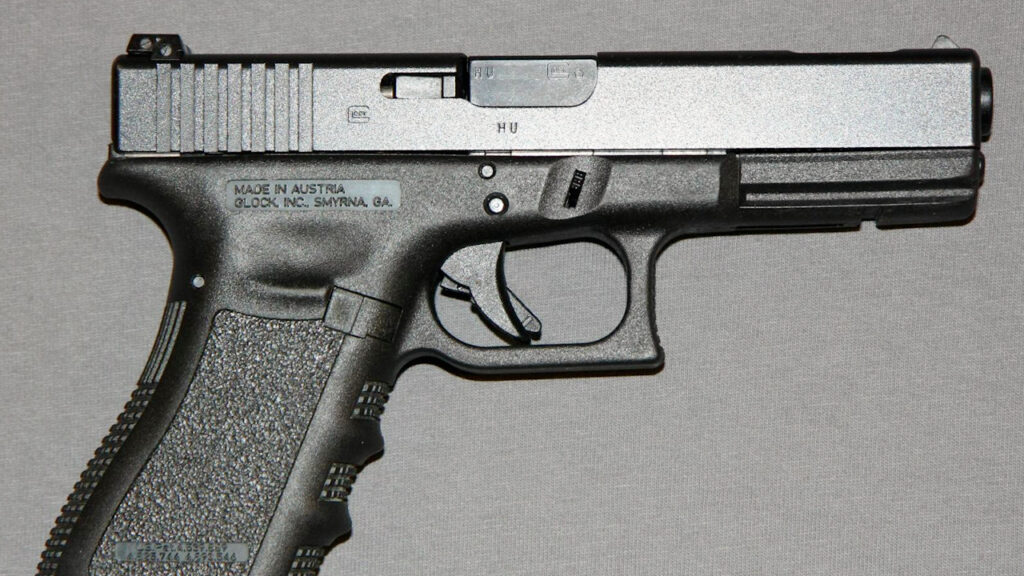
120° grip angle copied by Sig P320 and HK VP9, defining modern pistol ergonomics.
Safety Philosophy
“No manual safety” design popularized Dynamic Safety theory—reliability through simplicity.
“The Glock 17 redefined reliability—simple as a hammer, precise as a quartz watch.”