Prologue: The Gunshot Amidst the Berlin Wall’s Fall
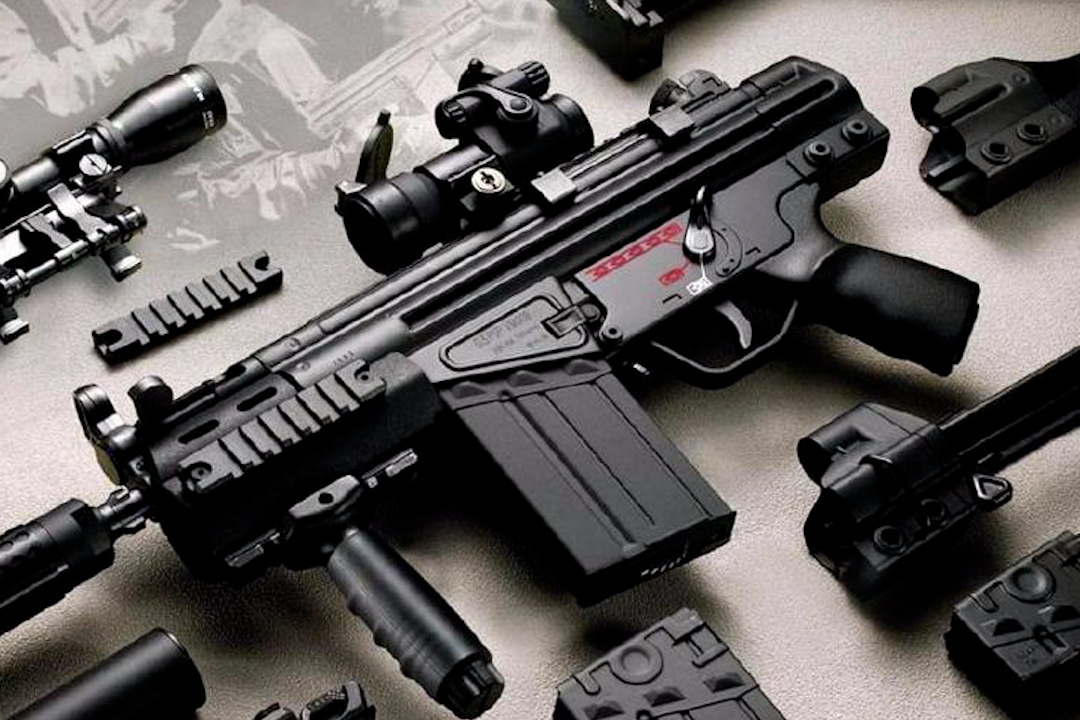
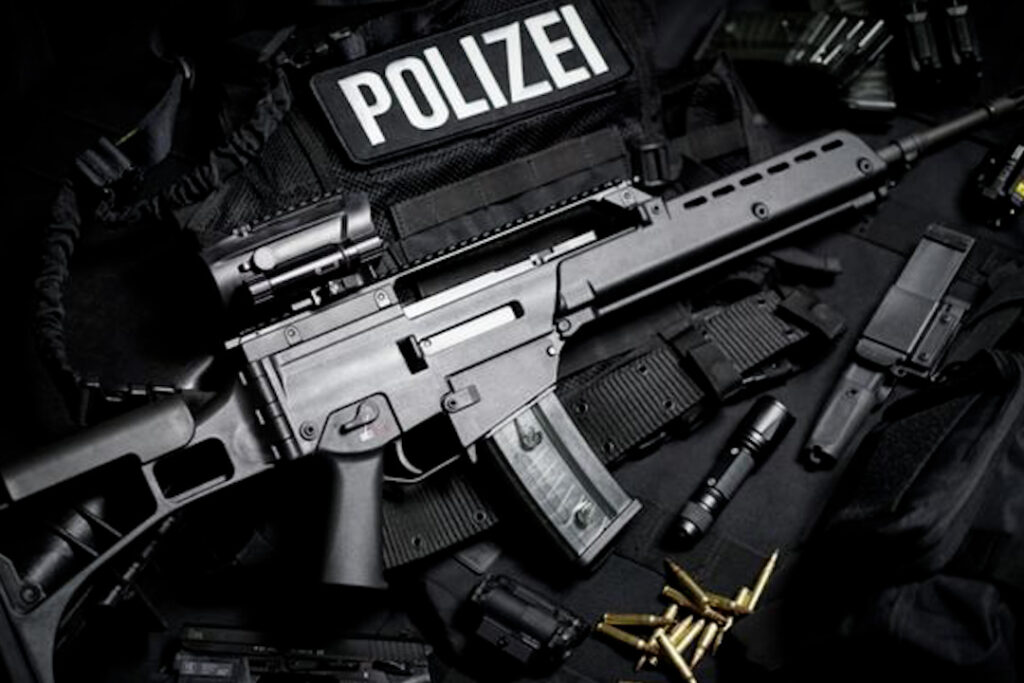
As the dust from the 1990 Berlin Wall collapse settled, engineers at Heckler & Koch were already drafting a new assault rifle blueprint. The G36, with 67% polymer components, revolutionized firearm material science while completing its journey from blueprint to service in just five years amidst post-reunification economic turbulence, becoming a symbol of NATO’s post-Cold War military innovation.
I. Material Revolution: The Engineering Marvel of Polymer Receivers
1.Steel-Reinforced Composite Architecture
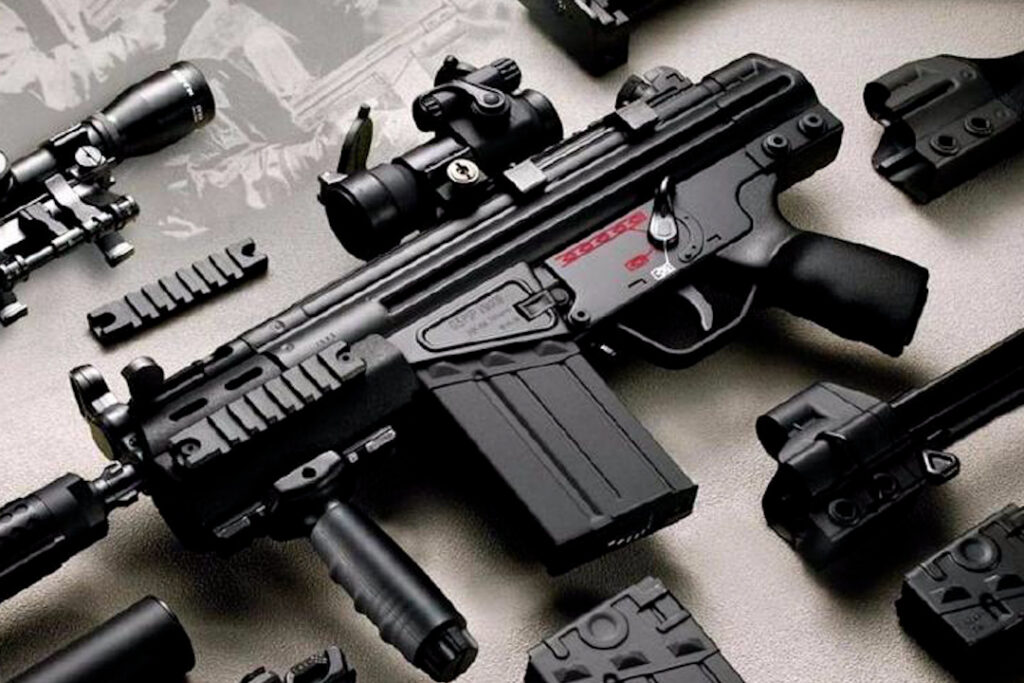
The G36 receiver embeds a 1.2mm stainless steel skeleton within nylon 66 matrix through high-pressure molding. This “steel-concrete” structure maintains a 3.63kg unloaded weight while withstanding over 10,000 joules of impact. Compared to all-steel AR-15 receivers, it boasts 23% higher bending resistance and 5x better corrosion tolerance.
2.Thermal-Adaptive Combat Performance
Carbon fiber-reinforced polymer maintains 0.02mm dimensional stability from -40℃ to +60℃. Norwegian Arctic tests in 1997 proved its frost-resistant grip comfort, where traditional metal weapons suffered surface adhesion.
3.Integrated Optical Ecosystem
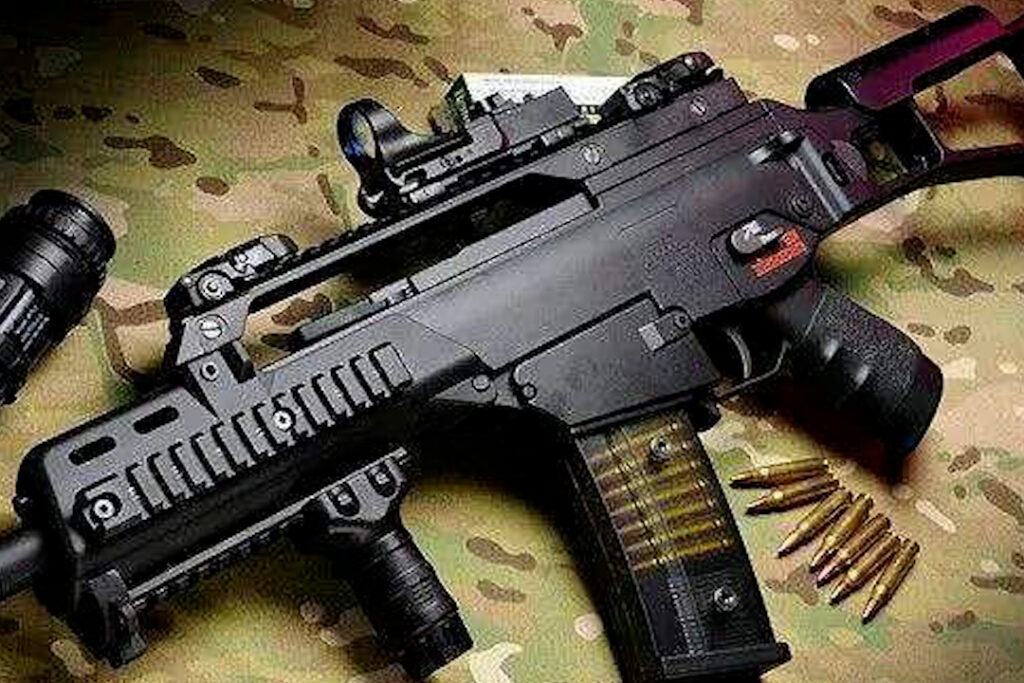
The carry handle integrates dual channels: a 3x telescopic sight and collimating red dot. This “periscopic” design lowers the sight axis to 1/3 of conventional rifles, reducing exposure by 57% in urban combat.
II. Kinetic Precision: Short-Stroke Piston Philosophy
1.6mm Ultra-Compact Gas System
Weighing 28g with 6mm piston stroke, the G36’s gas mechanism reduces recoil impulse duration to 2.3ms — 47% faster than M16’s direct impingement, enabling legendary 750 RPM controlled bursts.
2.Self-Cleaning Bolt System
The 17° locking lug angle combined with chrome lining maintains 0.08mm headspace after 800 rounds. Jane’s Defence 2002 tests showed 1/9 the malfunction rate of AK-74 in sandy conditions.
3.Thermodynamic Cooling
Matte-aluminized barrel scales and 19 vent holes reduce heat accumulation to 63% of HK33 levels. However, Afghanistan deployments exposed polymer’s thermal limits under extreme sustained fire.
III. Morphological Evolution: 7-Variant Tactical Matrix
1.G36K: Urban Warfare Golden Ratio
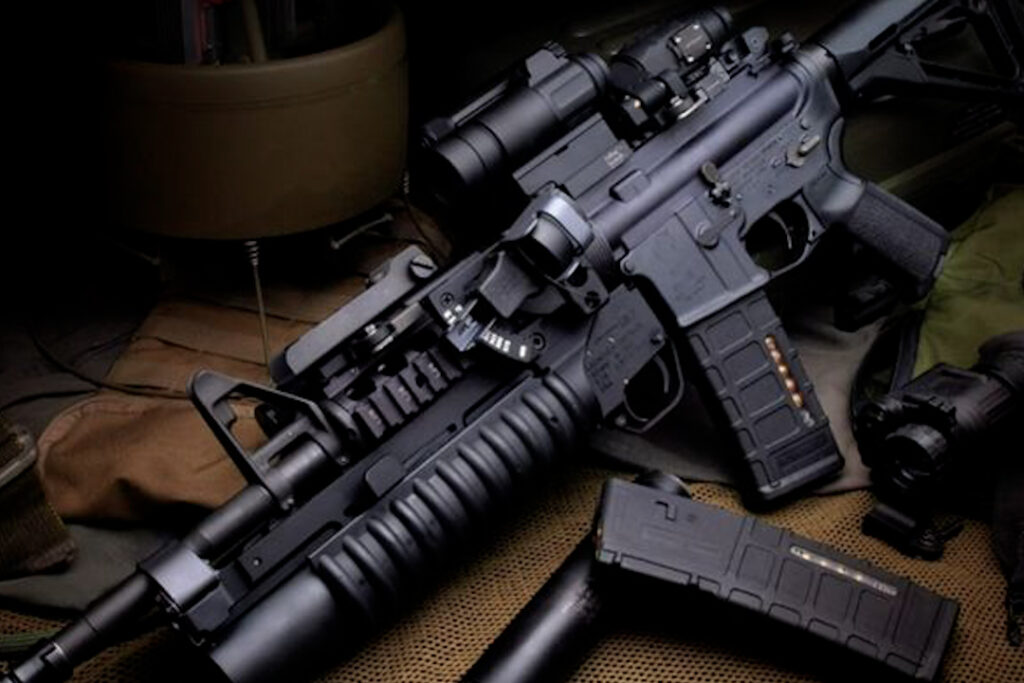
The 270mm barrel and folding stock compress overall length to 860mm. UK SAS reports noted 31% better agility than M4 carbines in armored vehicle operations.
2.G36C: Special Forces Modular Platform
At 720mm/2.8kg, it integrates Picatinny rails for AN/PEQ-15 modules. GSG9’s 2009 counter-hijacking proved its CQB precision in aircraft cabins.
3.MG36: Lightweight Squad Support
With heavy barrel and 100-round C-MAG drum, it triples suppressive fire while maintaining 5.2kg weight. Spanish Legion deployed it on ATVs as mobile firepoints in desert ops.
IV. Global Footprint: Procurement Logic Across 36 Nations
1.Optical Generation Leap
The 3x scope’s laser filter maintains PVS-15 night vision integrity. Lithuanian Army data shows 2.3x nighttime accuracy improvement over iron sights.
2.Ergonomic Economics
30° natural grip and 394mm cheek weld reduced recruit training cycles by 58% compared to G3. UK MoD calculated £2,300 annual savings per soldier.
3.Maintenance Revolution
Field-stripping in 7m23s via three pins contributed to 42% higher mean rounds between failures than HK417 in Bundeswehr 2016 data.
V. Controversy & Rebirth: Post-Precision Crisis Innovations
1.2012 Thermal Drift Scandal
Polymer warping 0.15mm under barrel heat expanded 300m dispersion 4x. HK’s cold-hammer-forged chrome barrels later raised thermal threshold to 210℃.
2.Digital Transformation
The 2021 G36A3 integrates smart rail sensors and ballistic computer interfaces, controlling precision fluctuations within ±12% under stress tests.
3.Caliber Expansion
Barrel conversion kits enable 6.8mm Remington SPC compatibility, boosting armor penetration to 173% of 5.56mm NATO while maintaining platform commonality.
Epilogue: The Eternal Dialectic of Polymer and Steel
Having proven polymer weapon reliability through 28 years of service since 1997, the G36 continues rewriting infantry systemization paradigms. As the Bundeswehr extends its service to 2040, this Cold War twilight-born rifle remains the ultimate answer to modern individual weapon systems.

