Amid the smoke of World War II, the Sten Gun—mockingly called the “Stench Gun” or “Accident King” by soldiers—rewrote firearm history with its crude appearance and staggering production. Born in Britain’s darkest hour, it cost just $9 per unit but yielded over 4 million units, becoming a symbol of Allied resistance. This article delves into the technical innovation, battlefield legacy, and historical impact of this controversial weapon.
Desperation Innovation: The “Lifesaver” After Dunkirk
Following the 1940 Dunkirk evacuation, Britain lost 75% of its equipment. Facing the firepower of Germany’s MP40 submachine guns, the UK was nearly defenseless. American-supplied Thompson submachine guns performed well but cost $200 each and relied on imported .45 ACP ammunition, straining logistics. Churchill’s government issued an urgent mandate: design a low-cost, mass-producible, ammunition-compatible submachine gun within months.
In early 1941, designers Reginald Shepherd and Harold Turpin at the Enfield Arsenal rose to the challenge. Using captured MP40s for reference, they prototyped the gun in just 36 days. The name “Sten” combined their surnames and “Enfield”. As the U.S. WWII Weapons Survey Report noted: “It was ugly, but cheap, powerful, and rapidly produced—a true wartime solution.”
Minimalist Design: 47 Parts That Revolutionized Manufacturing
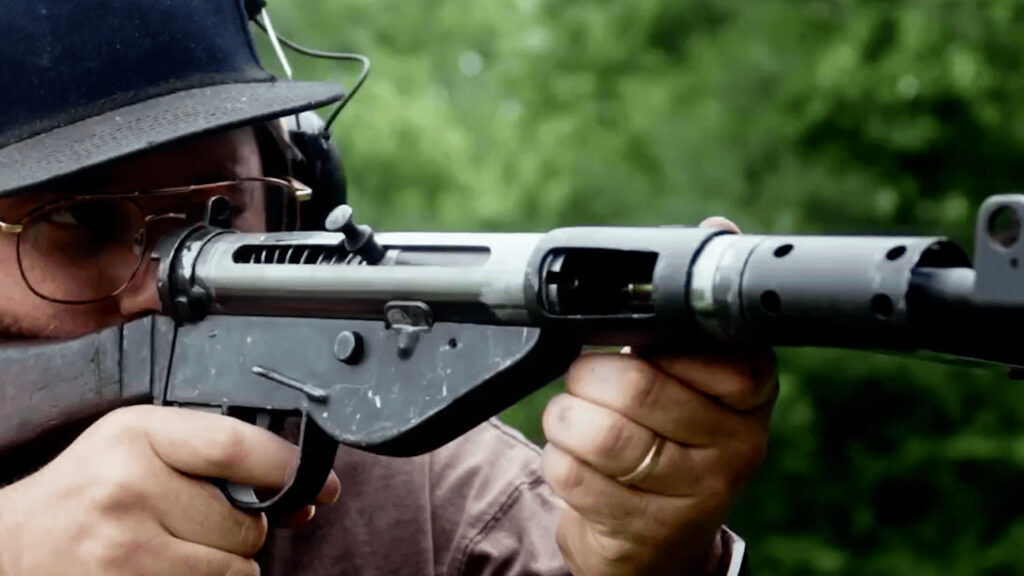
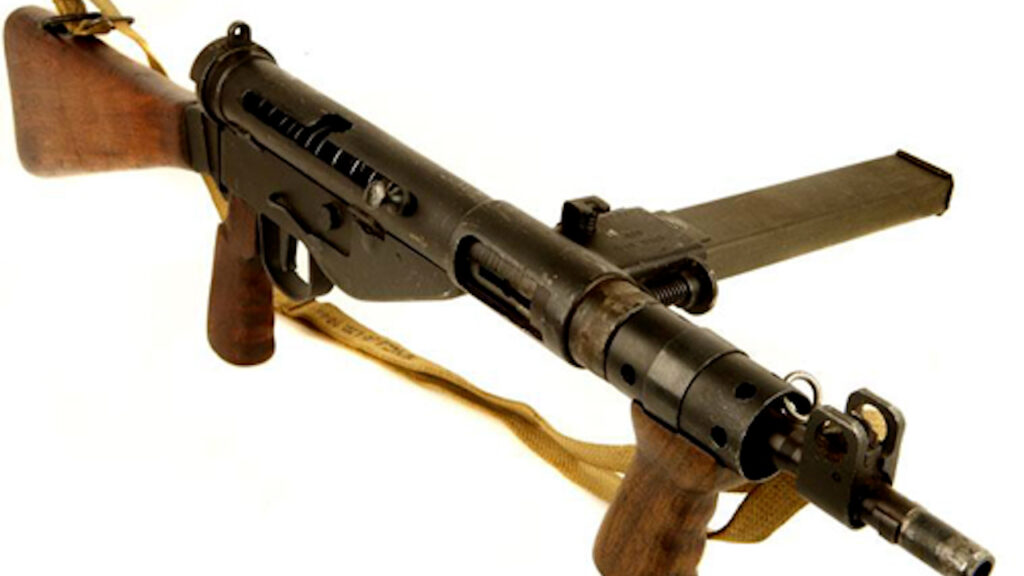
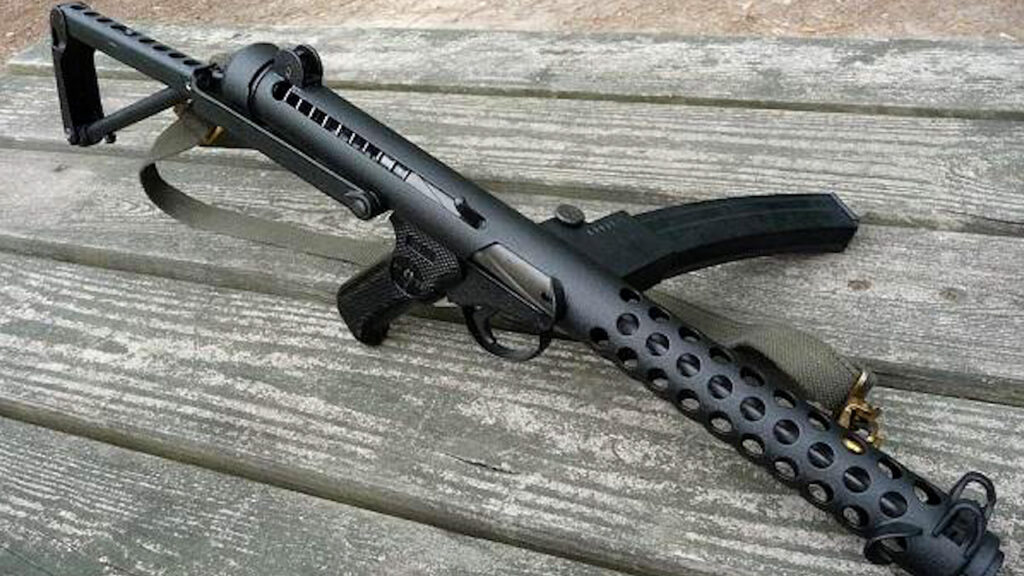
The Sten’s core innovation was replacing machined parts with stamped steel, turning gunmaking into an assembly-line process. With only 47 components, 80% were stamped sheets welded together; only the barrel and bolt required milling. Its body was a bare steel tube, the stock a welded rod, and springs were visible through the bolt slot.
Cost Revolution: At $9 per unit (1/20th of a Thompson’s cost) and 12-hour production time, even bicycle factories could manufacture it. Total WWII output exceeded 4 million units.
Ammo Compatibility: It used 9×19mm Parabellum rounds, identical to German ammunition, allowing troops to scavenge supplies.
Key Specs:
Caliber: 9mm
Capacity: 32 rounds (side-mounted magazine)
Rate of Fire: 550 rpm
Effective Range: 200 meters
Weight: 3.2 kg (unloaded)
Muzzle Velocity: 381 m/s
Yet simplicity came with flaws: a rudimentary safety caused accidental discharges (soldiers joked it “could hit enemies when thrown”), and weak magazines led to jams, earning it the nickname “Jam King”.
Battlefield Legend: From “Friendly Fire Menace” to Resistance Icon
The Sten’s combat record was paradoxical. At D-Day, Britain’s 6th Airborne Division used its firepower to breach German lines, but 15% of Allied casualties stemmed from friendly fire. Units mandated: “Sten carriers must march at the front.”
Global Impact:
European Resistance: Airdropped Mk.II variants to French and Polish partisans became symbols of underground warfare. The suppressed Mk.II(S) pioneered silencer tech in submachine guns, favored by commandos.
China-Burma Theater: Issued to Chinese Expeditionary Forces in 1943, dominating jungle combat against Japanese Type 100 SMGs.
Nazi Copy: Germany’s MP3008, a near-identical clone, validated its industrial design.
Soldiers’ Verdict:
Praise: “A plumber’s pipe dream? Maybe, but it emptied a mag in 5 seconds and saved my life.” —British paratrooper.
Criticism: “I’d rather carry a knife than trust this ticking bomb.” —Canadian infantry diary.
Evolution: From Mk.I to Mk.V
Six variants reflected wartime rapid iteration:
Mk.I (1941): First model, prone to jams; limited production.
Mk.II (1942): Most successful (70% of total). Lightweight (2.95 kg), durable, airdropped worldwide.
Mk.II(S): Integrated silencer for special forces; used until the Korean War.
Mk.III (1943): Further simplified parts but offered no performance gain.
Mk.IV: Prototype micro-version (445 mm long), never mass-produced but hinted at future trends.
Mk.V (1944): Post-war upgrade with wooden stock and sights for aesthetics.
The Sten was replaced by the Sterling submachine gun post-WWII but saw action in the 1971 Indo-Pakistani War before fading after the 1984 Indira Gandhi assassination.
Legacy: The Controversy That Shaped History
The Sten’s influence transcended military use:
Industrial Revolution: It popularized stamped-metal firearms, inspiring successors like the U.S. M3 “Grease Gun”.
Cultural Icon: Films like Saving Private Ryan cemented its image as Britain’s WWII emblem, nicknamed the “London Typewriter”.
Historical Judgment: Churchill’s adage—”In war, perfection is the enemy of good”—fits perfectly. Unrefined yet mass-produced, it underpinned Allied victory.
As firearms historian John Walter concluded: “The Sten embodies the paradox of emergency arms: it proved that in the darkest hours, simplicity and efficiency can coexist.”