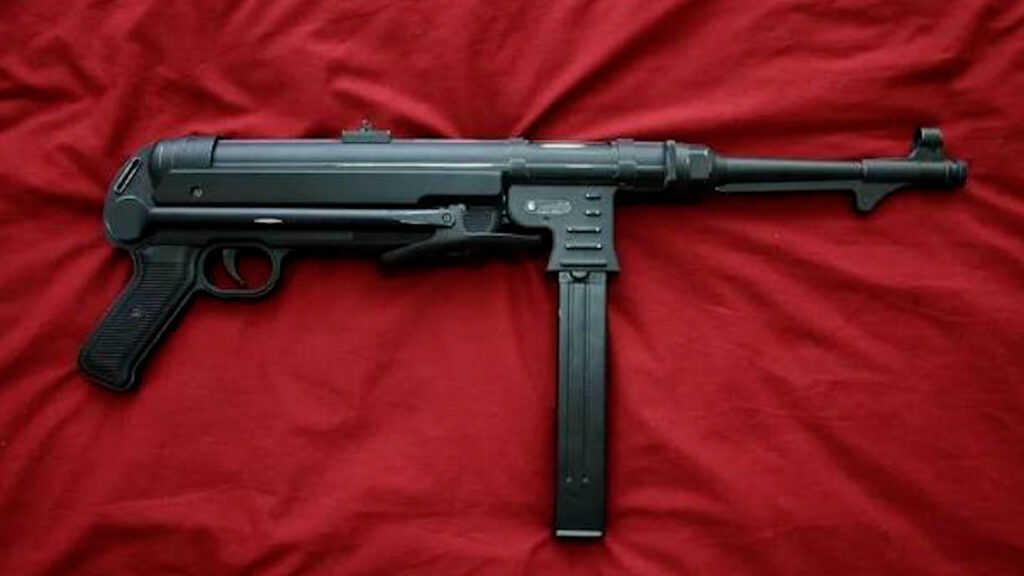
When Nazi Germany’s war machine swept across Europe, the MP40 submachine gun (Maschinenpistole 40) became an icon of violent ambition. Costing just one-tenth of a German worker’s monthly wage, its 1.2 million units armed panzergrenadiers and paratroopers, while Hollywood cemented its image as the “Nazi standard.” This article dissects the paradox: Why was it called the “Trench Broom” yet abandoned at Stalingrad? Why did it vanish in 1945 but inspire the U.S. M3 “Grease Gun”?
Industrial Miracle Born of Blitzkrieg: From MP38 to MP40
During the 1939 invasion of Poland, German armor faced a critical flaw: infantry armed with Mauser 98K rifles (15 rpm) couldn’t suppress anti-tank crews at close range. Costly early SMGs (e.g., MP28) failed to meet mass-production demands.
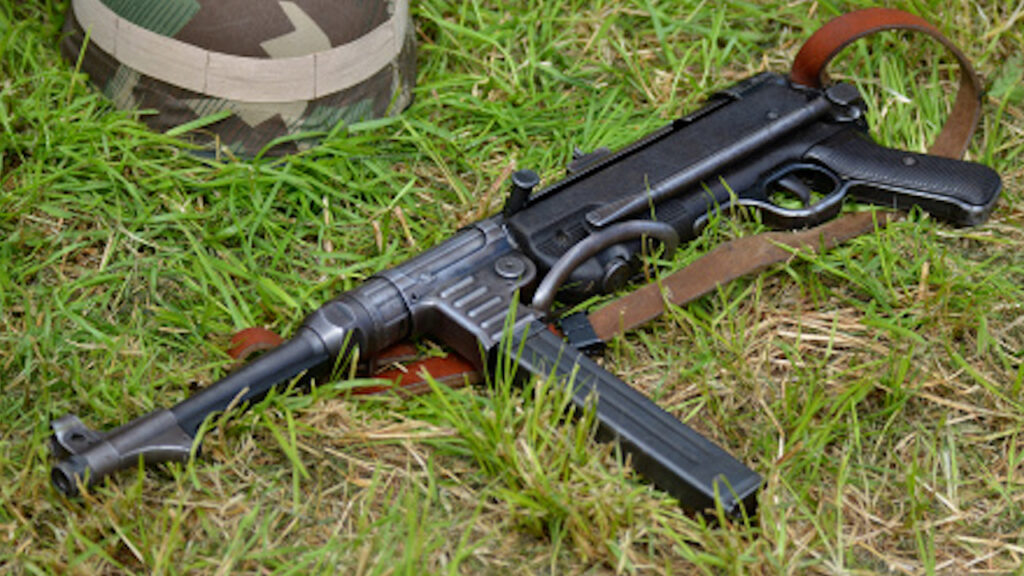
Designer Heinrich Vollmer streamlined the MP38 (1938) for wartime manufacturing:
Stamped Revolution: Steel stampings replaced milled parts, cutting receiver cost by 70%. Non-military factories (e.g., bicycle plants) produced components.
Folding Stock: A tubular steel stock reduced length to 630mm, ideal for tank crews firing from hatches and paratroopers jumping.
Ammo Commonality: Used standard 9×19mm Parabellum rounds, allowing captured Allied ammo resupply.
By 1940, the MP40 cost just 56 Reichsmarks (≈$9) with 12-hour assembly time. Over 1,037,400 units flooded battlefields by 1945, embodying the same logic as Britain’s Sten: quantity over refinement.
Dual Battlefield Identity: Precision Tool or “PPSh’s Prey”?
MP40’s combat record reveals stark contradictions:
Strengths:
Controlled Bursts: Nested recoil springs dampened vibration, maintaining tight groupings at 500 rpm. Its low recoil was showcased in The Bridge (1969), where a teenage partisan fires it one-handed.
CQB Dominance: During the 1940 assault on Belgium’s Eben-Emael Fortress, paratroopers used MP40s to suppress bunker slits, neutralizing 1,200 defenders in 30 minutes.
Cold Resistance: Aluminum receiver and plastic grips functioned at -40°C on the Eastern Front, outperforming early PPSh-41.
Fatal Flaws:
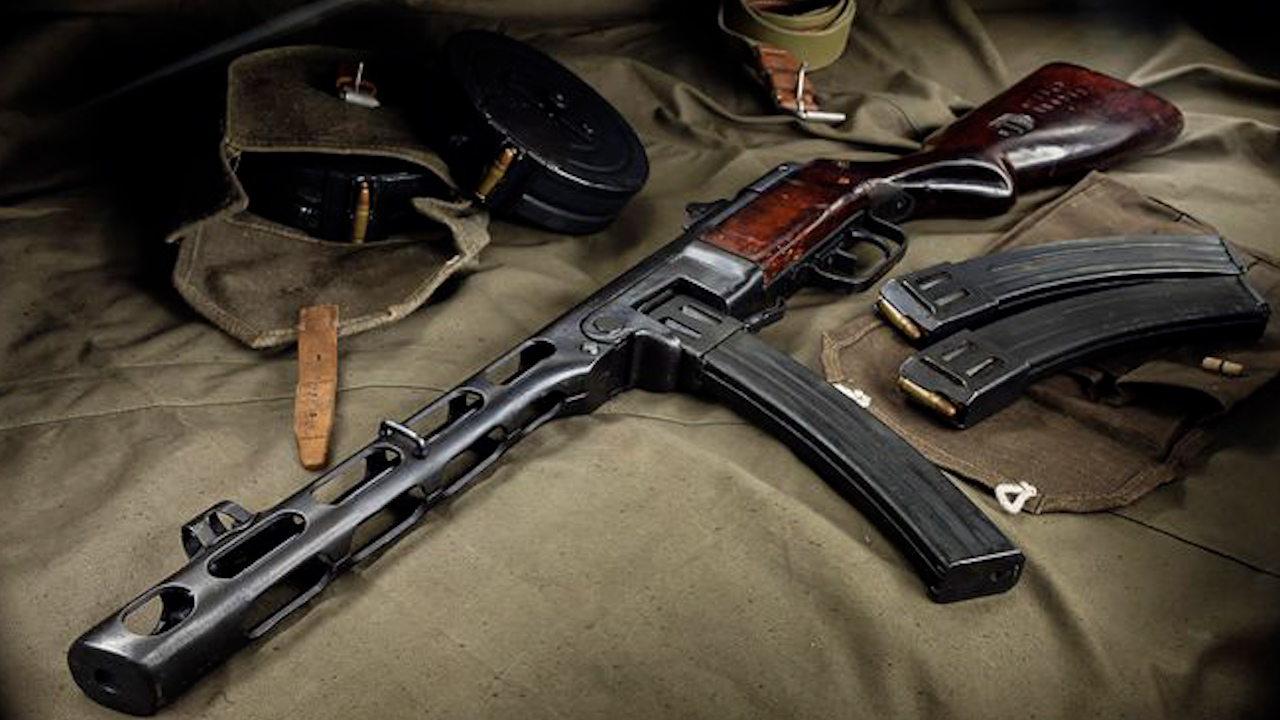
Rate of Fire: At 500 rpm, it was 55% slower than the PPSh (900 rpm), leaving German squads outgunned in Stalingrad’s alleys.
Magazine Crisis: 32-round magazines forced 2.2× more reloads than PPSh drum mags. Wehrmacht veteran Hans von Luck recalled: “Those 5 seconds reloading were enough for Russians to cross the street with grenades.”
Accidental Discharge: Primitive safeties caused misfires; paratroopers tied leather straps around charging handles.
By 1943, Eastern Front troops discarded MP40s for captured PPShs. Germany’s answer—MP41(r) rechambered for 9mm—saw only limited production.
Evolution: From MP38 to Experimental Twin-Mag
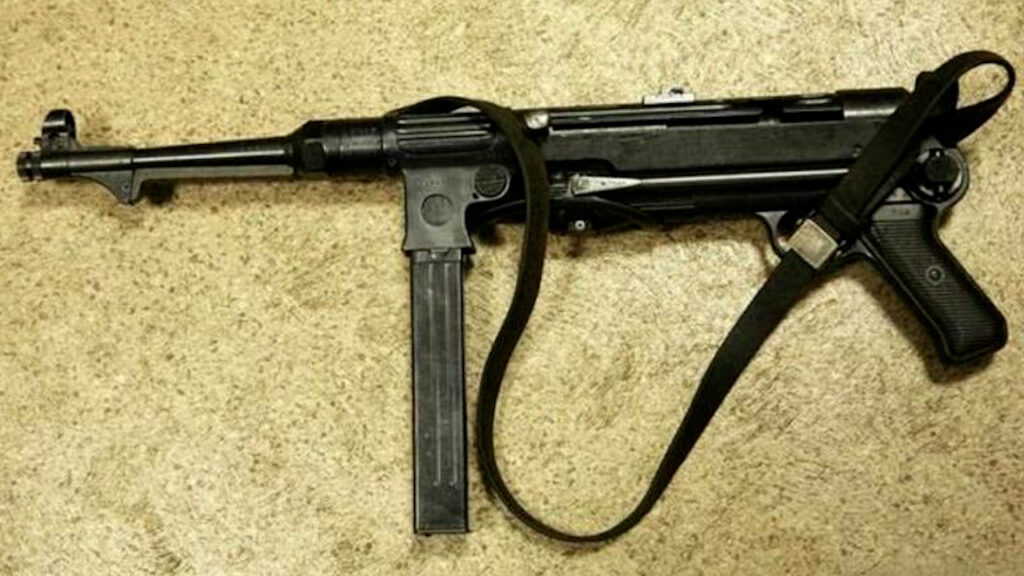
MP40’s wartime variants reflected ruthless pragmatism:
Model Innovation Role
MP38 (1938) First folding stock/plastic grip Debut in Poland, tank crews only
MP40 (1940) Stamped receiver/simplified firing pin Main variant (70% of production)
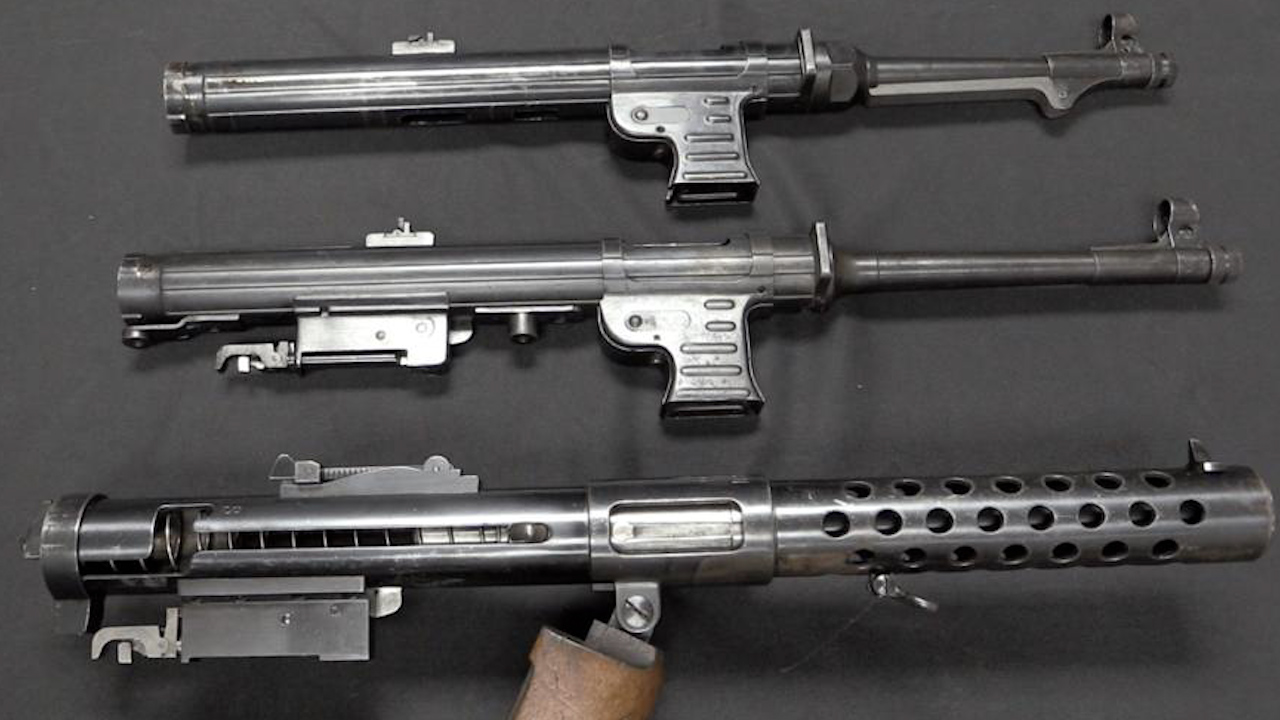
MP40/II (1942) Twin-magazine well (64 rounds) Eastern Front prototype, prone to jams
MP41 (1941) Fixed wooden stock + selector switch Likely for Axis allies, never issued
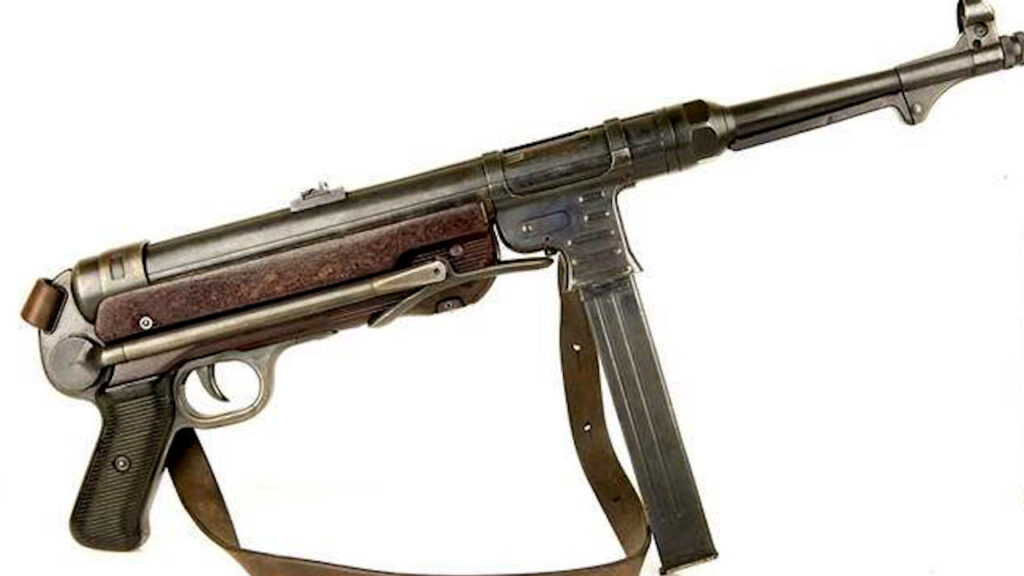
The MP40/II’s sliding dual-mag system was innovative but weighed 5.2kg and was scrapped—a “what-if” of WWII engineering.
Eastern vs. Western Front: MP40 vs. Allied SMGs
MP40’s clashes with Allied counterparts revealed national industrial philosophies:
Against the Sten:
MP40 out-ranged it (200m vs. 100m effective), but the Sten’s $9 price tag and 4 million units overwhelmed German precision.
Against the Thompson:
Thompson’s .45 ACP hit harder, yet the MP40 was 1.2kg lighter—critical for Afrika Korps mobility in North Africa.
Against the PPSh:
PPSh’s 71-round drum and 900 rpm dominated under 100m; MP40 only excelled beyond 200m. As firearms historian John Walter noted: “The MP40 was an engineer’s gun; the PPSh was a soldier’s gun.”
Cultural Immortality: From Battlefield to Screen Icon
MP40’s legacy transcended warfare:
Industrial Legacy: Its stamping tech inspired the U.S. M3 “Grease Gun” (1944), dubbed “MP40’s American cousin”.
Pop Culture Symbol: In Saving Private Ryan and Band of Brothers, its rattle signaled Nazi presence. Even in Call of Duty, it remains a fan-favorite “retro powerhouse”.
Historical Paradox: Though cemented as a Nazi emblem, Norway’s tank units used MP40s until the 1980s—a Cold War relic.
Epilogue: Steel, Blood, and Human Hands
The MP40 epitomizes WWII’s brutal industrial calculus: its stamped steel fueled Blitzkrieg’s early triumphs, yet its 32-round magazine symbolized the Reich’s collapse. As a Volkssturm soldier graffiti’d during the Battle of Berlin: “MP40 verrät nicht, aber siegt nicht.” (“MP40 won’t betray, but won’t win.”) It reminds us: a weapon’s worth lies in the hands that wield it.