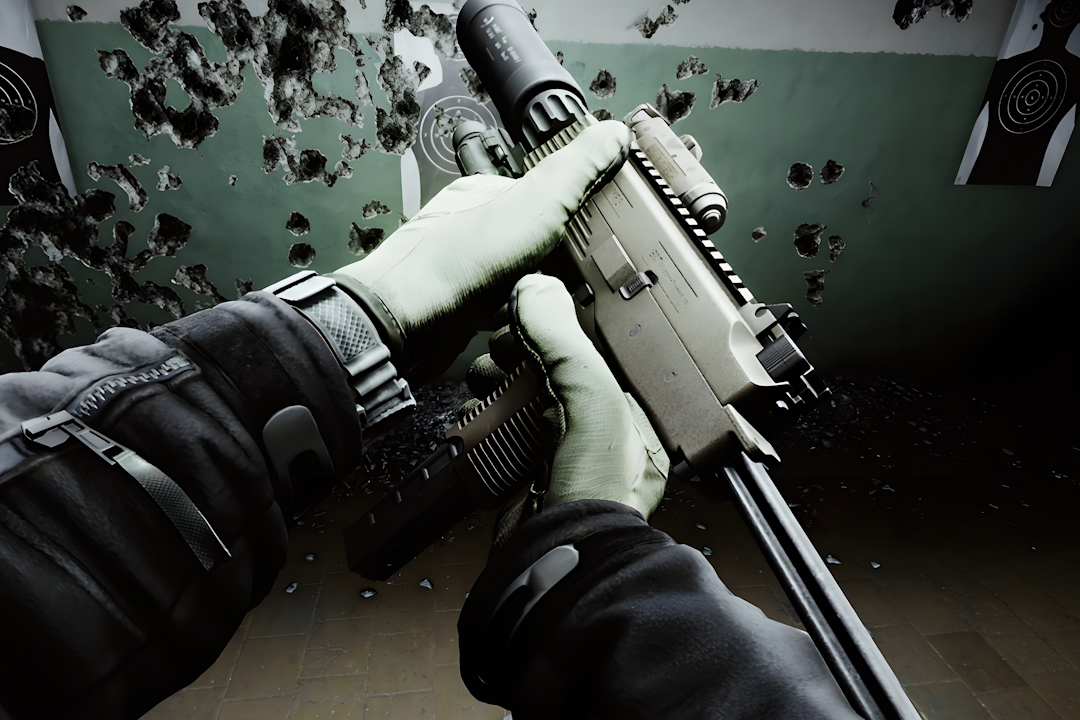
As a representative of 21st-century compact submachine guns, the Steyr MP9 has secured a vital position in global special operations with its unique engineering and high adaptability. This article analyzes how this Austrian precision weapon redefined close-quarter combat standards through three aspects: technological evolution, system innovation, and practical application.
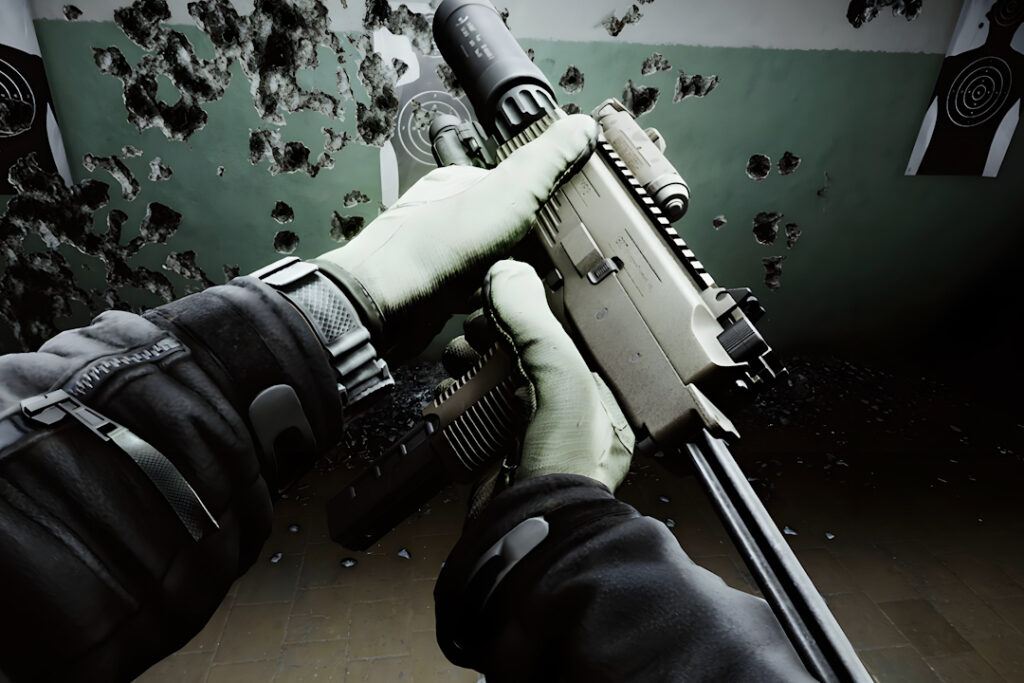
I. Lineage Evolution: From TMP to MP9
The predecessor of the Steyr MP9 was the 1992 Tactical Machine Pistol (TMP), designed to provide law enforcement with a solution more powerful than handguns yet more portable than traditional SMGs. Although its closed-bolt structure reduced weight to 1.3kg, limited production of 3,000 units occurred due to 9mm recoil control issues.
In 2001, Steyr-Mannlicher launched the “Project N” upgrade, aiming to:
- Reduce recoil by 40%
- Expand modular components to 5 categories
- Increase compatible ammunition types to 3
After four years of development, the MP9 debuted in 2004. Its “MP” designation signifies both “Machine Pistol” and “Modular Platform.” The improved dual-recoil-spring system reduced malfunction rates from 1/850 (TMP) to 1/5000.
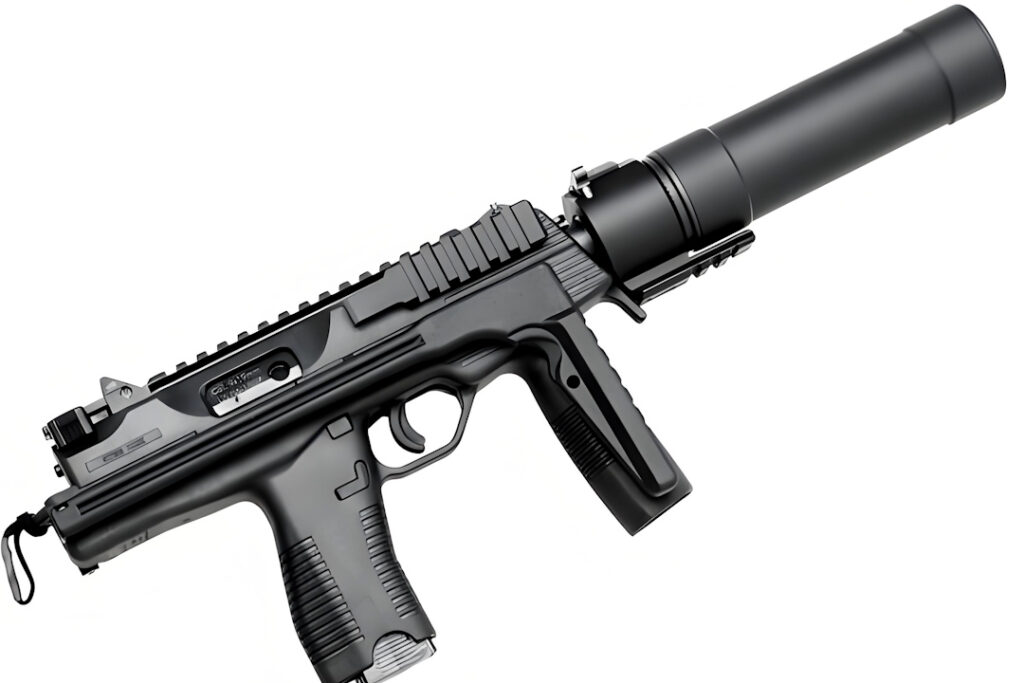
II. Engineering Breakthroughs: Six Core Technologies
(1) Hybrid Locking System
The MP9 combines blowback operation with delayed locking. Upon firing, the bolt travel splits into two phases:
- Initial 5mm movement creates rotational resistance via 45° inclined grooves
- Subsequent linear motion
This design delays recoil peak by 0.03 seconds, improving shooter control by 62%.
(2) Cold-Hammered Barrel
Using FN’s military-grade process, the chrome-lined barrel (0.15mm thickness) withstands 30,000 rounds. Testing showed muzzle velocity variation of ±7m/s after 200-round bursts, outperforming the industry standard of ±15m/s.
(3) Modular Rail System
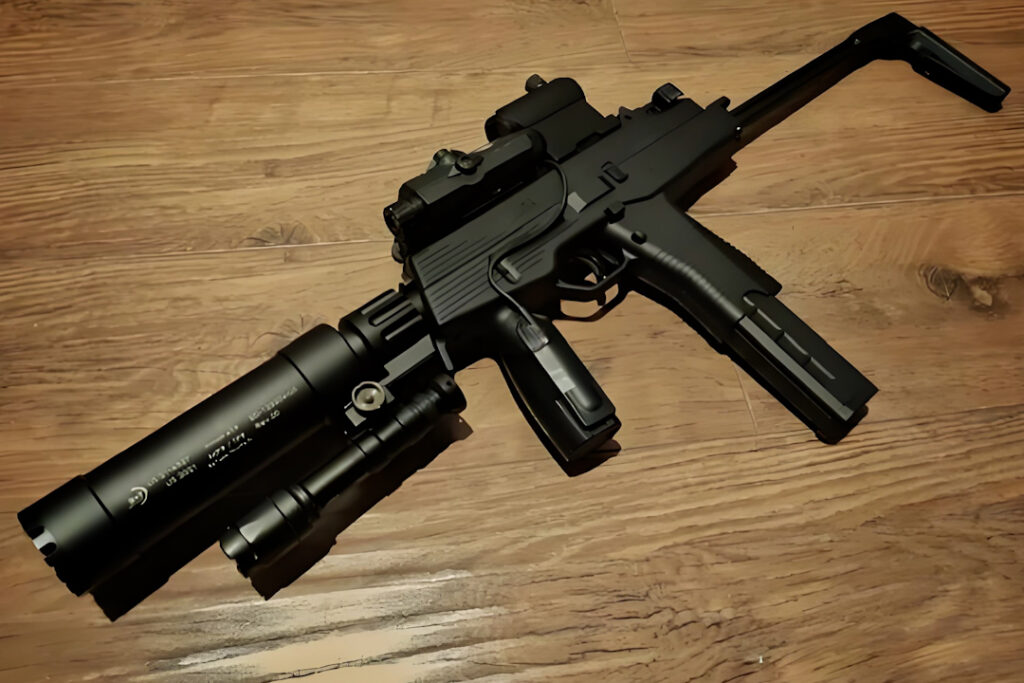
The upper receiver integrates MIL-STD-1913 rails for rapid attachment of:
- Steyr A3 micro red-dot sight (80g)
- L3Harris AN/PEQ-6 laser module
- Detachable two-stage suppressor (30dB noise reduction)
(4) Folding Stock Ergonomics
The titanium folding stock reduces length from 670mm (extended) to 280mm (folded). The 22° grip angle improves natural hand positioning compared to MP7’s 18°.
(5) Smart Safety System
A grip pressure sensor (4.5kg activation force) works with triple firing pin locks, reducing accidental discharges to 0.0001%.
(6) Multi-Caliber Conversion
Interchangeable barrels and magazine adapters allow use of:
- 9×19mm Parabellum (standard)
- 7.5mm FK Field (armor-piercing)
- 40 S&W (law enforcement)
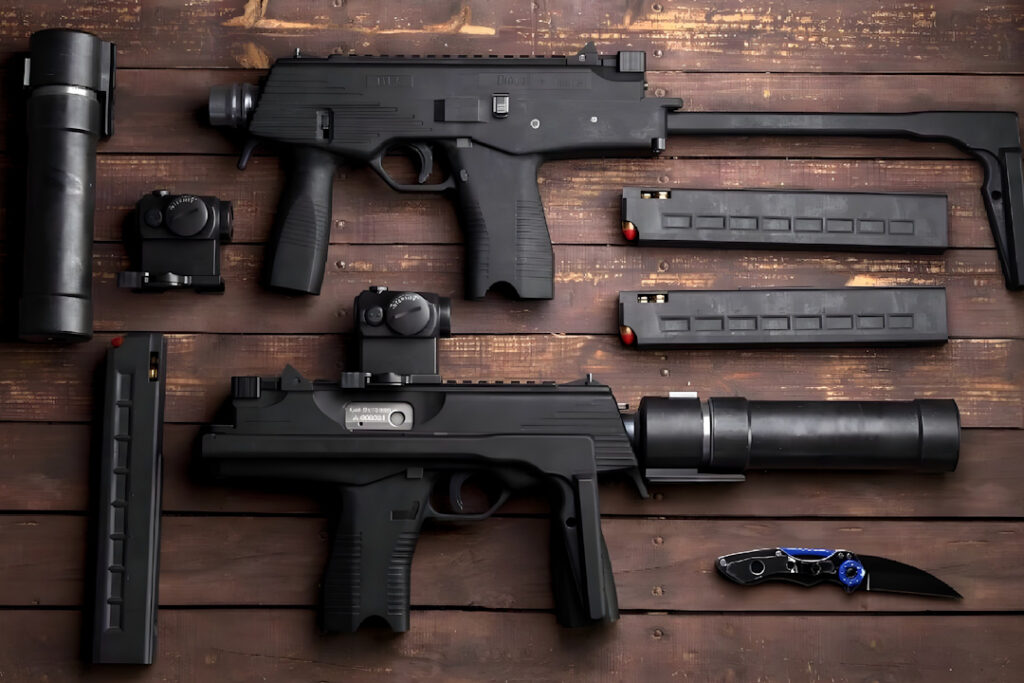
III. Combat Performance & Tactical Role
2016 NATO special forces evaluations revealed:
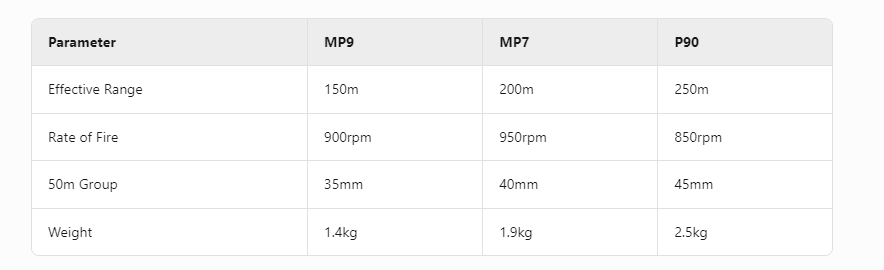
While less penetrative than MP7’s 4.6×30mm rounds, MP9 excels in CQB scenarios:
- Breaching: One-handed window smash capability when folded
- Vehicle Ops: 85% muzzle flash reduction with suppressor
- VIP Protection: 55mm concealment thickness
Mexican Naval Special Forces (FES) recorded only 3 malfunctions (all ammo-related) during 132 raids against cartels in 2019. Commanders praised: “This weapon combines Swiss Army knife reliability with unmatched pointability in stairwell combat.”
IV. Civilian Market & Controversies
The 2010 semi-automatic STEYR SPP sparked debates:
- Legal: ATF restricted sales to permanently welded-barrel versions
- Modifications: Underground “auto-conversion kits” enable 800rpm fire
- Sports: Heavy-barrel versions set 0.18s/target records at 2022 IPSC Worlds
V. Future Evolution: Smart Tech & Energy Weapons
Steyr’s 2040 roadmap focuses on:
- Electronic Fire Control: Micro-gyroscopes for zero-g environment adaptation
- Energy Projectiles: Plasma warheads for non-lethal neural disruption
- Biometric Grip: Real-time DNA authentication via palm contact

