I. Trench Stalemate Breeds a Revolution
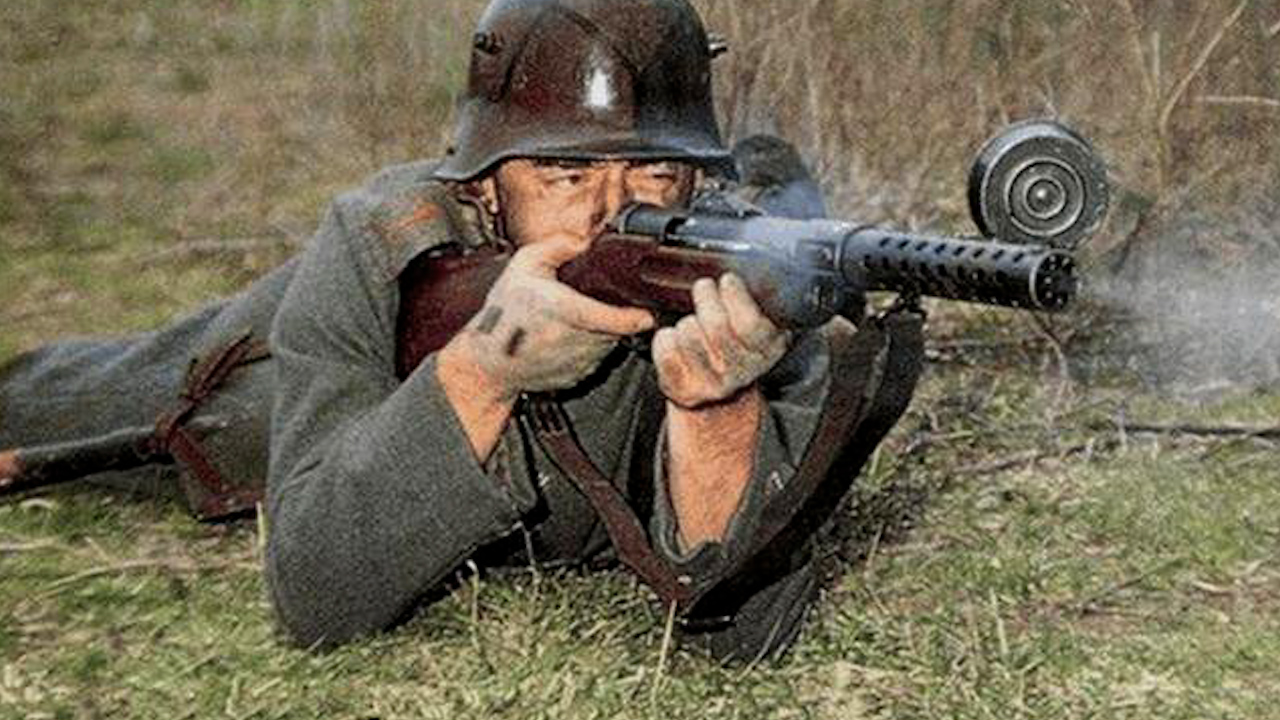
In 1914, the Western Front descended into a bloody trench deadlock. Facing kill zones bristling with machine guns and barbed wire, Germany’s human-wave assaults became a meat grinder. To break the impasse, the German Army secretly formed Sturmtruppen (Stormtroopers) in 1915—elite squads needing a personal weapon capable of saturating narrow trenches with fire.
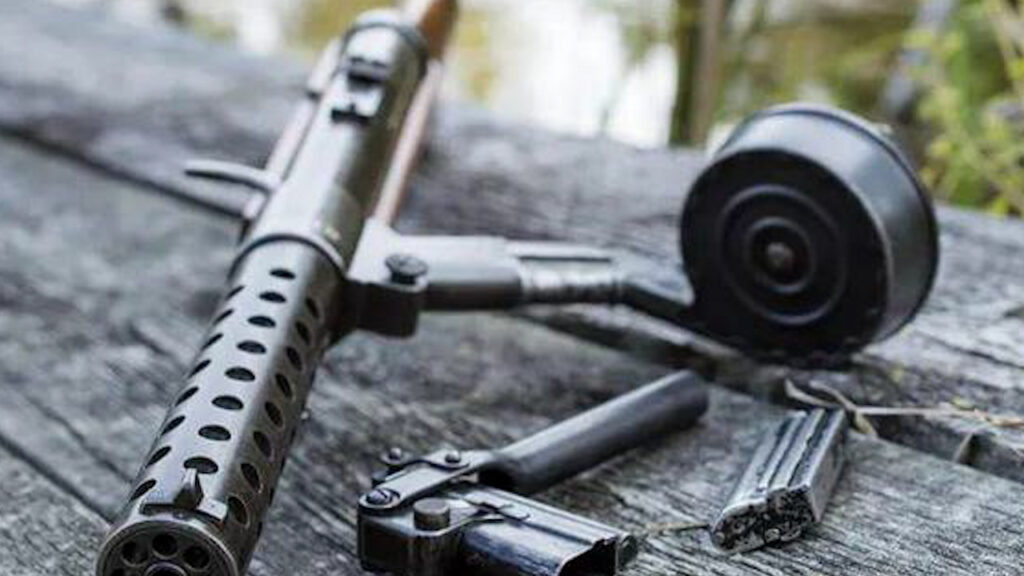
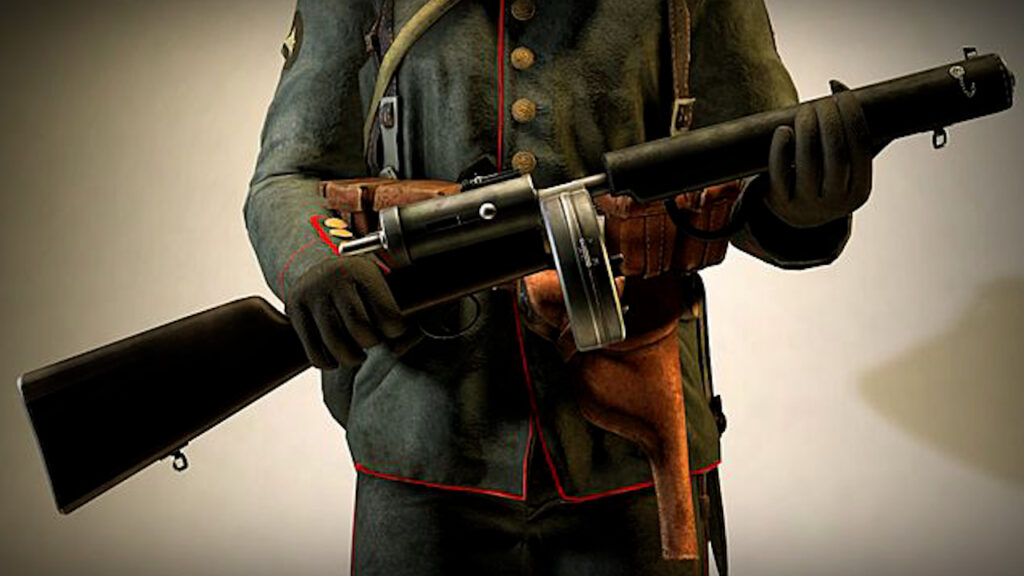
By 1917, Hugo Schmeisser’s team at Bergmann Works delivered the answer: the MP18 submachine gun. It harnessed the revolutionary free-blowback principle, firing 9×19mm Parabellum rounds at 400 RPM. Its most iconic feature was the honeycomb heat shroud around the barrel—not just a visual signature but an engineering solution enabling sustained fire.
II. Engineering Codex: Three Innovations That Rewrote Warfare
Thermal Revolution: The Honeycomb Shroud
Conventional barrels jammed from heat expansion during prolonged firing. The MP18’s steel shroud, perforated with 120 precision-drilled holes, created a “chimney effect” that reduced barrel temperatures by 40%. This allowed Stormtroopers to empty a drum in 30 seconds, suppressing enemy machine guns within 100 meters.
Drum vs. Magazine: A Battlefield Dilemma
The initial MP18 used Luger P08’s 32-round snail drum, but combat exposed fatal flaws: leftward weight shift caused aim deviation, and reloading took three minutes. By autumn 1918, frontline troops switched to 20-round straight magazines with a 90° vertical feed—sacrificing capacity for mobility, a concept that shaped modern SMG design.
Ergonomics: Turning Farmers into Fighters in Three Days
Rejecting pistol grips, the MP18 adopted the Gew 98 rifle’s walnut stock. Recruits shouldered it instinctively, achieving prone-shot accuracy hitting bricks at 50 meters (Red Army combat records). Its modular construction—just 37 parts—allowed field-stripping in 15 seconds, with mud-induced failures at one-fifth the rate of Thompson SMGs.
III. Combat Legend: Blood and Iron in the 1918 Spring Offensive
On March 21, 1918, Operation Kaiserschlacht erupted in Picardy, France. Three thousand MP18-armed Stormtroopers infiltrated British lines, unleashing hell at dawn:
Somme Breakthrough: The 18th Assault Battalion cleared trenches in five minutes, annihilating a British company with only nine casualties.
Amiens Rail Trench: German teams used “crossing fire” tactics in tunnels, one drum’s density equaling six Lee-Enfields.
Though Germany lost the war, the MP18 inflicted 72,000 casualties in five months. British reporters dubbed it the “Hell’s Sewing Machine,” while French troops discovered—to their horror—that sandbags no longer guaranteed safety.

IV. Eastern Saga: China’s “Flower Machine Gun”
The Treaty of Versailles forced Germany to destroy MP18s, but thousands entered China via Swiss channels. Its fluted shroud inspired a poetic name: Huā Jīguān (花机关, “Flower Machine Gun”).
Warlord Era Dominance
In the 1924 Zhili-Fengtian War, Fengtian general Li Jinglin formed a 500-man “Flower Machine Gun Daredevil Squad.” Their jungle ambushes shattered enemy lines, prompting warlords to declare: “One Flower Gun equals ten Hanyang rifles!” Local arsenals produced copies, with Shanghai versions chambered in 7.63mm Mauser to share ammunition with “Broomhandle” pistols.
Red Army’s Spearhead
The Communists reserved MP18s for decisive actions:
Luding Bridge: 22 commandos scaled chains under covering fire from Flowers;
Xiang River Breakout: The 34th Division formed a rearguard “wall of fire” with 92 SMGs, delaying pursuers for eight hours.
During the Anti-Japanese War, the 115th Division ambushed Japanese convoys at Pingxingguan. Imperial Army reports lamented: “New Chinese weapons rain bullets; our men fall as if thunderstruck”.

V. Global Legacy: From Versailles Ban to Worldwide Copies
Article 168 of the Versailles Treaty banned German SMG development, but Schmeisser secretly joined Haenel Works, creating the MP28 in 1922—adding a fire-selector and improved sights while boosting RPM to 550. This “forbidden fruit” triggered a global arms wave:
UK: The 1940 Lanchester SMG added a bayonet lug and brass magazine well;
Japan: The Type 100 copied MP28’s feed system but foolishly omitted the foregrip for “precision”;
USSR: PPD-34 borrowed the heat shroud, evolving into the 6-million-unit PPSh-41.
Cultural impact endures: From Battlefield 1’s animated drum counter to the MP18K in Cliff Walkers, this century-old weapon remains an icon of ballistic artistry.
VI. Eternal Doctrine: Why MP18 Still Teaches Special Forces
Amid polymer-frame SMGs, the MP18’s trinity of principles still shines:
“Reliability over fire rate, ergonomics over specs, simplicity as ultimate sophistication.” — Hugo Schmeisser’s design notes
In 2017, during the Battle of Raqqa, Kurdish militia defended a cellar with museum-piece MP18 clones. While modern guns jammed in sand, this 4.2kg steel veteran proved: true legends never fade.