Introduction: The “Metal Storm” That Changed Warfare
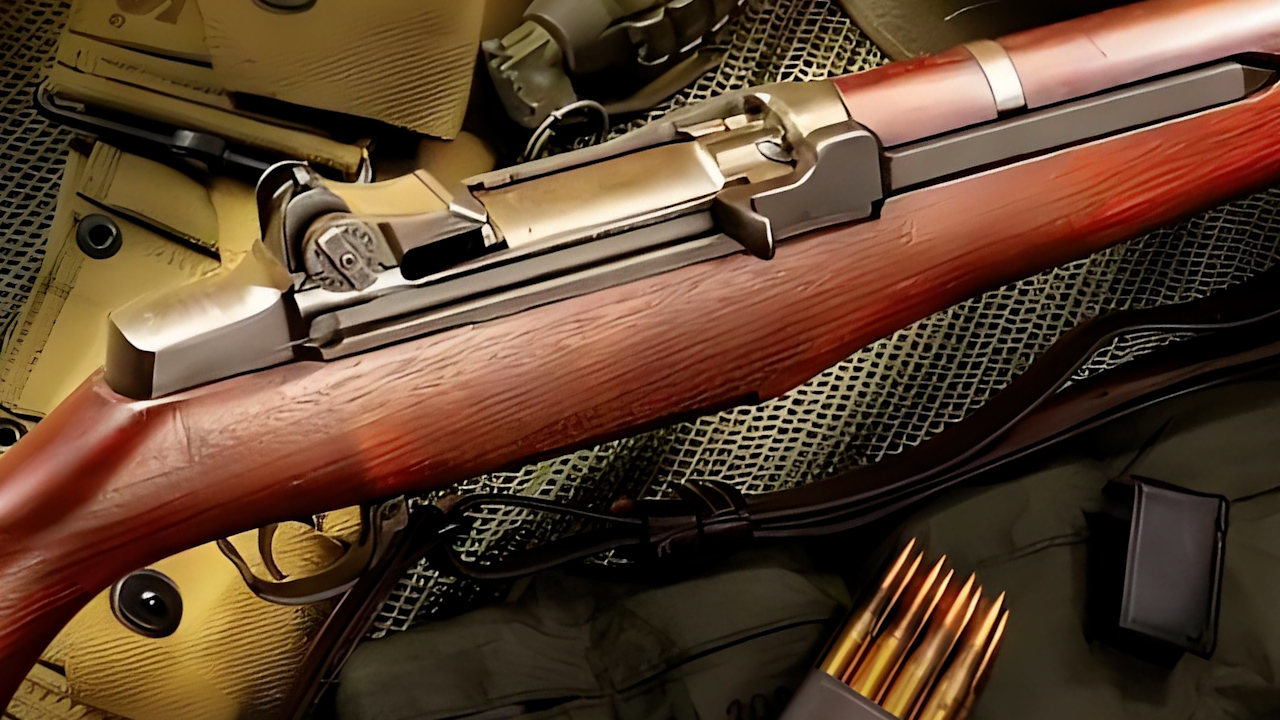
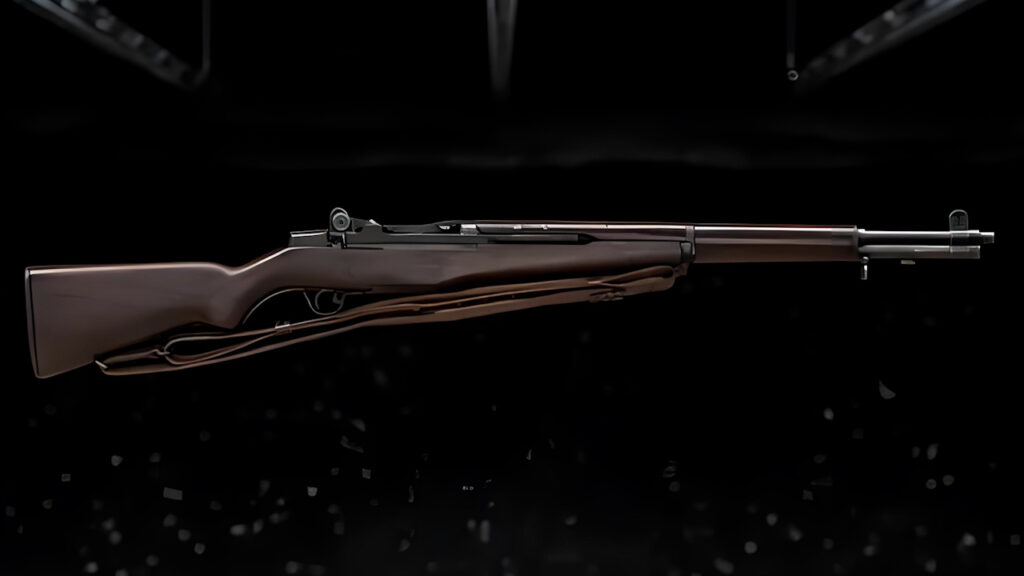
On Omaha Beach during the D-Day landings of 1944, U.S. soldiers wielded a rifle whose semi-automatic firepower shattered German defenses. Hailed by General George Patton as “the greatest battle implement ever devised”, the M1 Garand became the world’s first mass-produced semi-automatic rifle and an enduring symbol of the American GI. Its signature “ping” — the sound of an ejected en-bloc clip — echoed across battlefields, earning it the Chinese nickname “Big Eight Rounds” among Korean War soldiers.
Birth: A Decade-Long Engineering Triumph
1.1 A Tortuous Development Path
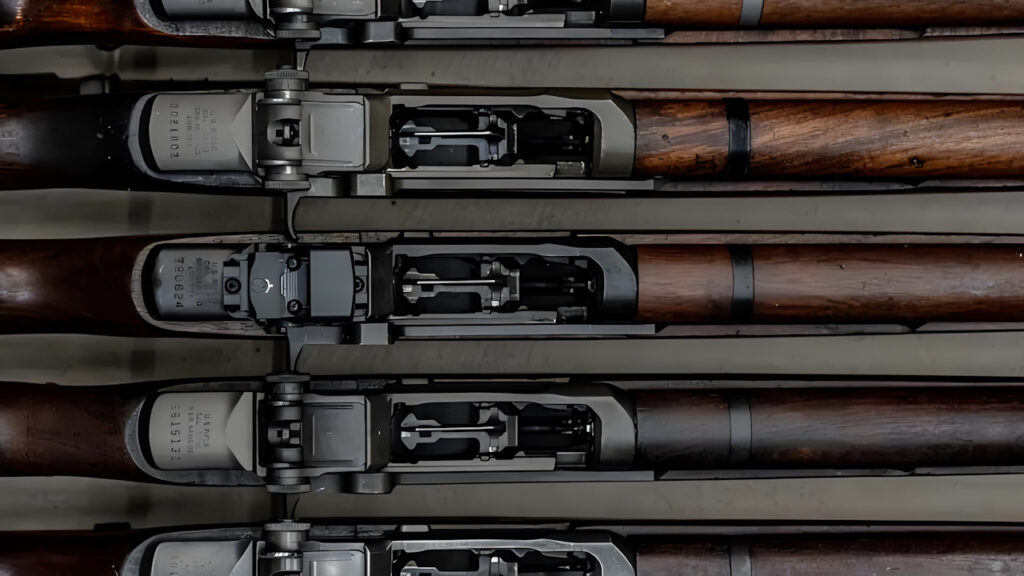
Canadian designer John Garand began developing the rifle at Springfield Armory in 1920. After 16 years of refinement:
Caliber Debate: The U.S. Army initially demanded a 7mm round but reverted to 7.62×63mm (.30-06) to use existing ammunition stockpiles.
Gas System Revolution: Early muzzle-trap gas mechanisms caused accuracy issues; a 1939 redesign placed the gas port under the barrel for stability.
1936 Finalization: Designated “United States Rifle, Caliber .30, M1” with production starting in 1937.
1.2 Wartime Production Surge
Post-Pearl Harbor manufacturing exploded:
Four Manufacturers: Springfield Armory and Winchester led production; Harrington & Richardson and International Harvester joined in the 1950s.
5.5 Million Units: Supplied 70% of U.S. infantry rifles in WWII, with 160,000 more made during the Korean War.
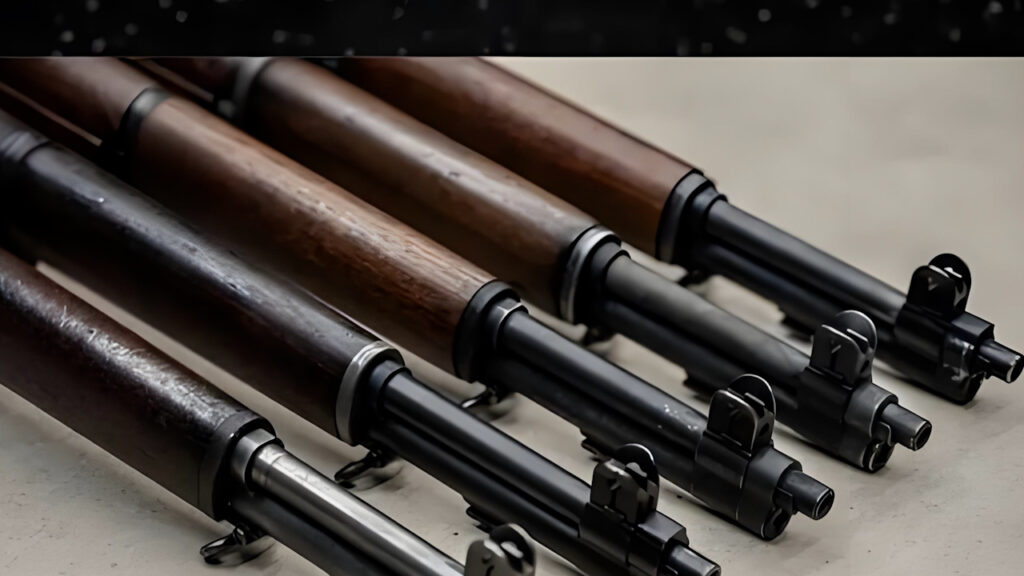
Cost-Effective Design: Walnut stocks and parkerized steel balanced durability and mass production.
Technical Breakdown: A Semi-Automatic Revolution
2.1 Core Mechanism: Gas Piston & Rotating Bolt
Operation: Propellant gases drove a piston to rotate and unlock the bolt, eject spent casings, and chamber new rounds, enabling semi-automatic fire.
Firepower Leap: 40 rounds/minute rate of fire—triple that of bolt-action rifles like Japan’s Type 38.
2.2 Iconic Feeding: The En-Bloc Clip’s Pros and Cons
Rapid Reloading: An 8-round steel clip inserted top-down, auto-ejecting with a “ping” when empty.
Tactical Drawback: The “ping” could reveal reloads, though battlefield noise often masked it.
Manual Ejection: Partial clips could be manually ejected to conserve ammo.
2.3 Precision & Reliability
Aperture Sights: Adjustable rear sight outperformed contemporary notch sights.
All-Environment Durability: Functioned from -40°C to 50°C; field-stripped in 5 minutes.
Combat Legacy: From Normandy to Chosin Reservoir
3.1 WWII: Dominating the Battlefield
Pacific Theater: At Guadalcanal, four Marines suppressed Japanese machine guns with Garand’s rapid fire.
European Theater: On D-Day, M1s countered German MG42s at Omaha Beach; Patton called them “deadlier than machine guns”.
3.2 Korean War: Weapon of Friend and Foe
Chinese PLA’s Prize: Captured rifles nicknamed “Big Eight Rounds”; sniper Zhang Taofang used one against U.S. troops.
Logistical Strain: South Korean troops often discarded M1s due to heavy ammo consumption (200 rounds/soldier).
3.3 Variants: Snipers and Tankers
M1C/D Sniper: Equipped with M84 scope (2.5x) and flash hider, effective to 914m.
T26 “Tanker”: Experimental 18-inch barrel version (never fielded).
Cultural Icon: From Battlefield to Collectible
4.1 Military Legacy
Era-Defining Advantage: WWII’s only standard-issue semi-automatic rifle; basis of U.S. squad firepower (10 rifles/squad).
Evolutionary Bridge: 60% of parts reused in M14; Italian Beretta BM-59 derivatives served until the 1980s.
4.2 Pop Culture Immortality
Film Appearances: Carried by snipers in Saving Private Ryan and medics in Hacksaw Ridge.
Gaming Staple: Featured in Call of Duty; zombie-mode “G.O.A.T.” variant doubles fire rate.
4.3 Collector’s Treasure
Auction Records: Iwo Jima veteran rifles fetch 25,000; 442nd Regiment-marked versions hit 15,000.
Civilian Market: Refurbished units sold via Civilian Marksmanship Program (CMP) from $650.
Conclusion: Steel and Walnut, Forever Legendary
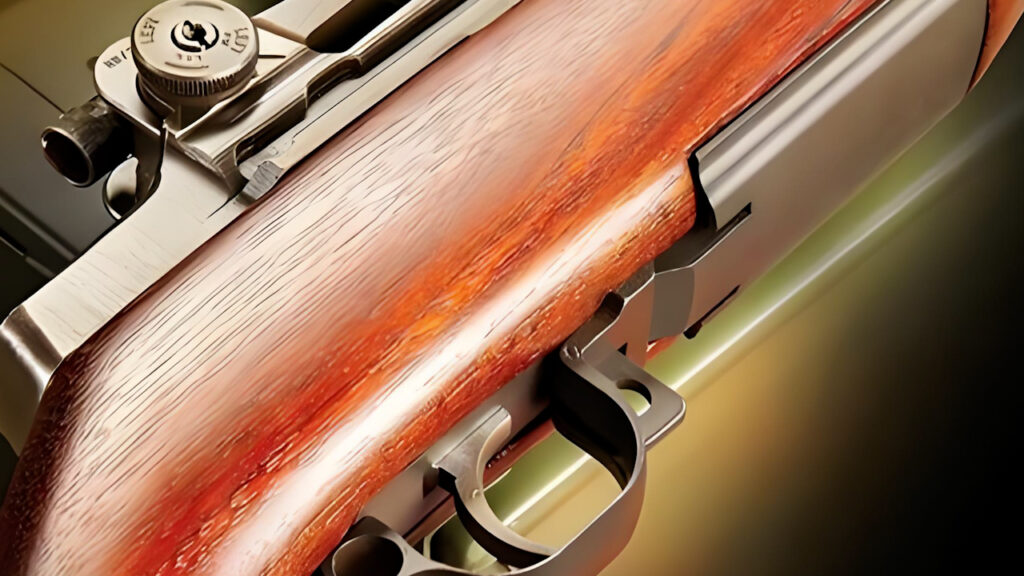
The M1 Garand transcends weaponry—it is industrial art. The warmth of its walnut stock against cold steel mirrors its dual legacy of destruction and preservation. From Pacific jungles to Korean blizzards, its 5.5 million barrels forged history. As Garand reflected late in life: “I designed it to bring soldiers home.” Today, this “Eight Shooter” remains immortal—a testament to ingenuity that reshaped warfare and endures as a beacon of engineering valor.