I. The “Trench Broom” Born Out of Time
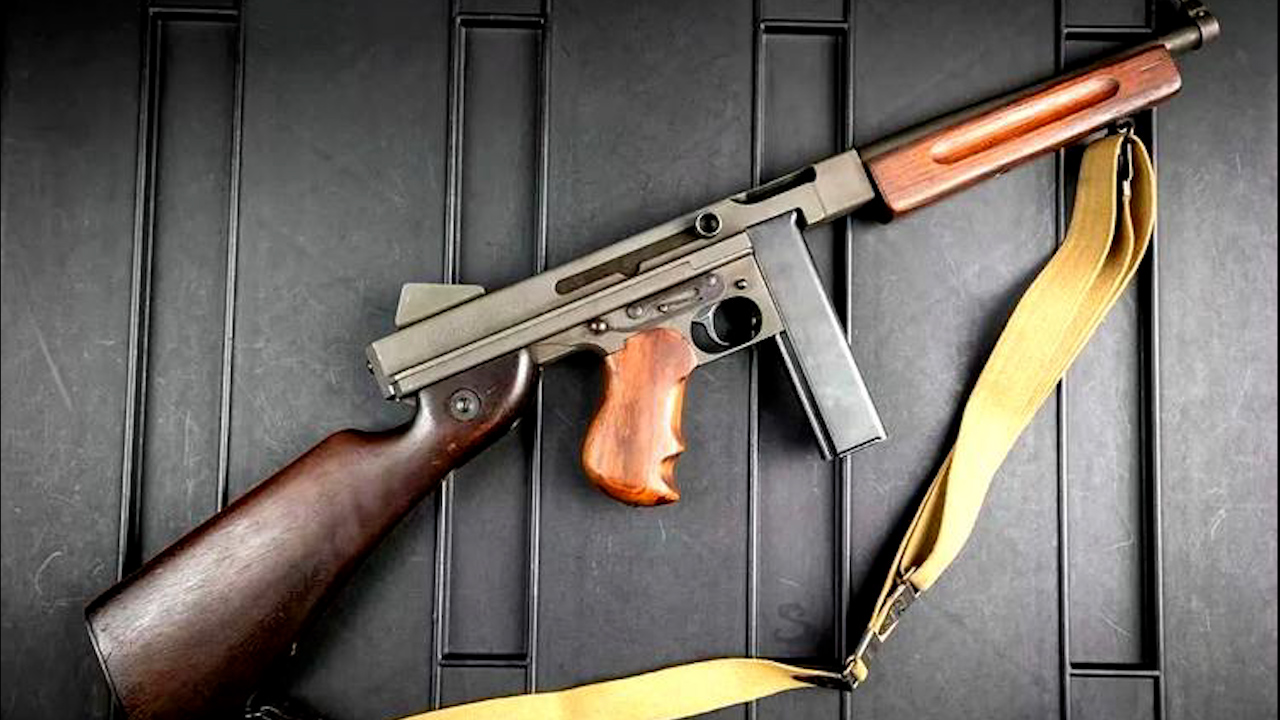
In 1918, as World War I raged, U.S. Army Ordnance officer General John Thompson envisioned a weapon to “sweep trenches like a broom clears dust”. But when the M1919 prototype (codenamed “Annihilator”) was completed, the war had ended. Forced into the civilian market, its $225 price tag (half the cost of a Ford Model T) doomed initial sales.
The turning point came in 1921. When Irish Republican Army agents attempted to smuggle 653 M1921 models to Ireland, U.S. customs seized 495 in New York Harbor. These “steel beasts” flooded the streets, igniting an arms race among American gangsters—Al Capone used them in the St. Valentine’s Day Massacre, while John Dillinger robbed banks across the Midwest. The “Chicago Typewriter” became synonymous with lawlessness.
Historical Paradox:
“It was meant for liberty, but first spoke the language of crime.”
—1929 New York Times on gang warfare
II. Symphony of Death: Engineering Meets Mayhem
The .45 ACP Stopping Power
Thompson’s soul resided in its .45 ACP cartridge—a 14.9g bullet traveling at 282m/s delivered unmatched stopping power, instantly incapacitating targets with torso hits. Yet this came at a cost: In Pacific jungles, rounds often failed to penetrate slender trees or even Japanese bamboo body armor.
Clockwork Precision
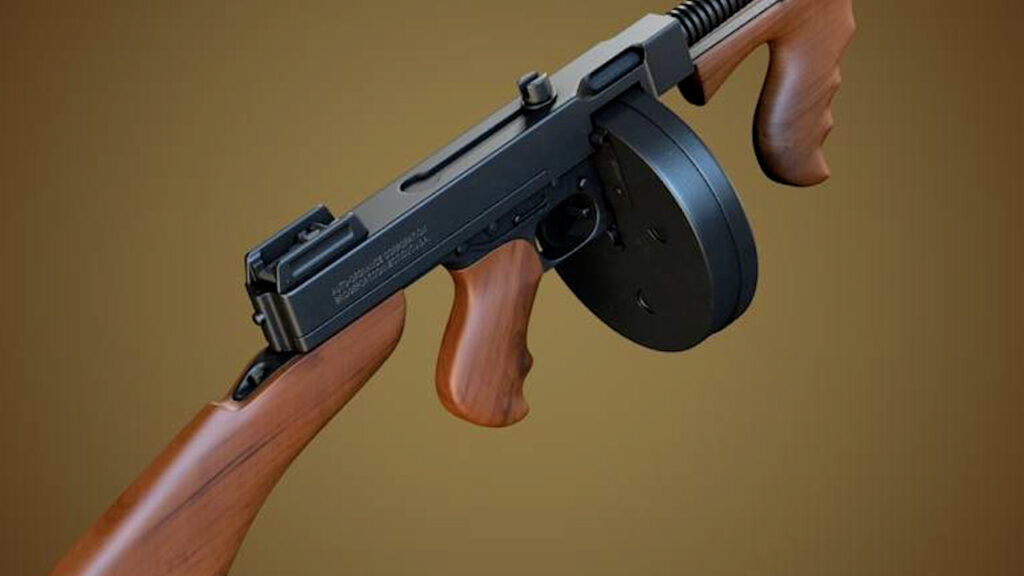
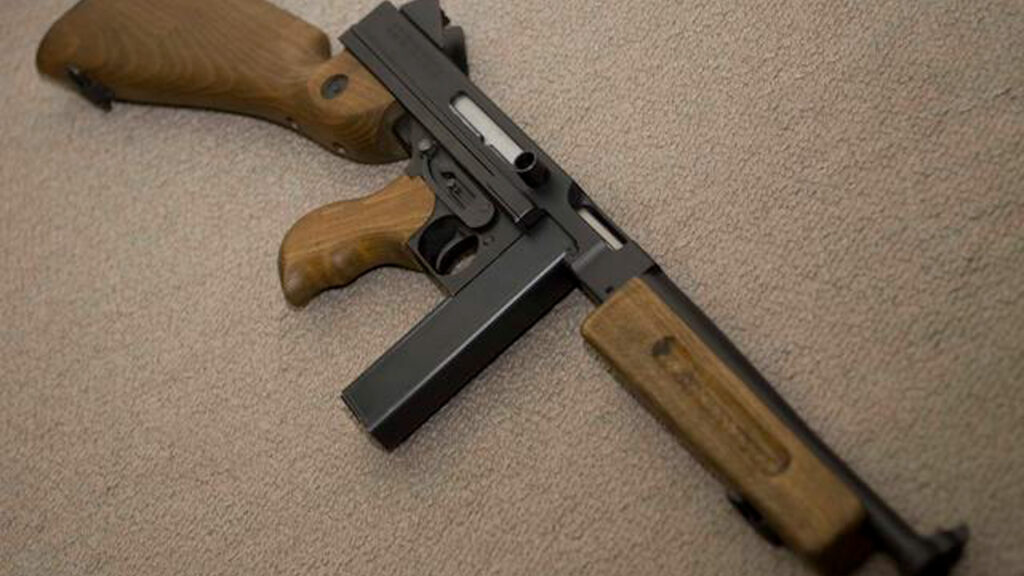
Delayed Blowback: The M1928A1’s unique H-shaped bronze lock delayed unlocking by 0.0003 seconds via 70° angled friction;
Thermal Artistry: Fluted barrel rings dissipated 40% of heat, enabling sustained 100-round drum dumps;
Modular Pioneer: The removable Cutts Compensator tightened burst dispersion to 1.5m radius.
This craftsmanship made Thompson the “finest SMG”—but also its curse. Hand-fitted from 37 parts, it cost 7 times more than Germany’s MP40.
III. WWII Resurrection: From Infamy to Glory
After Pearl Harbor, the Allies faced an automatic weapons crisis. Britain urgently ordered 100,000 M1928A1s but slashed quantities due to production bottlenecks. U.S. Marines discovered its duality on Guadalcanal:
Pacific Hell: The 1st Marine Division cleared bunkers with Thompson’s .45 rounds creating “human blenders” in confined spaces;
Fatal Flaw: At 11.4kg fully loaded, it bogged down troops in humidity, soon replaced by BARs.
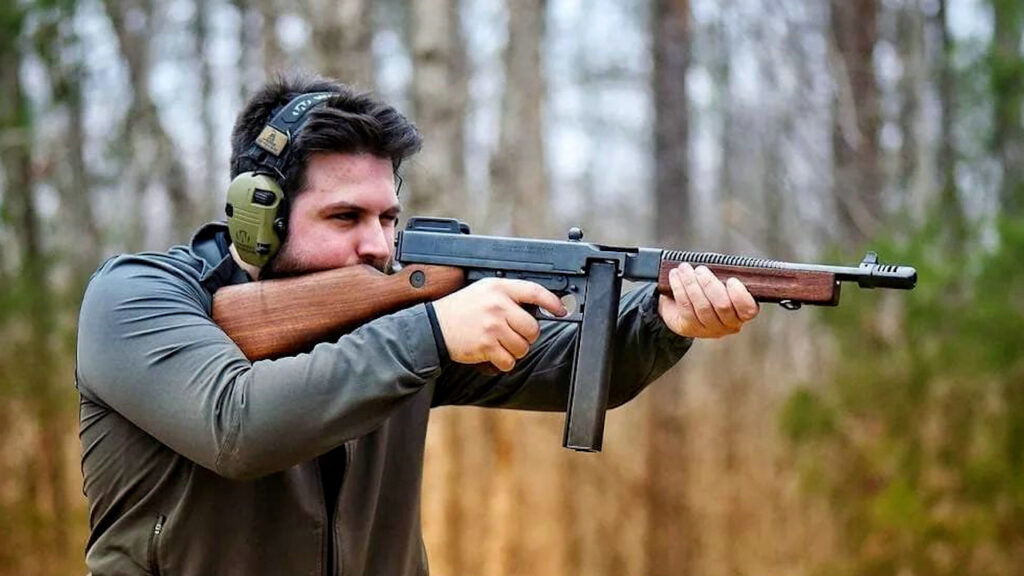
The legend solidified at Normandy. On June 6, 1944, Rangers breached MG42 kill zones on Omaha Beach. One soldier wrote: “When the drum’s staccato echoed, Germans fell like wheat—that was our D-Day fanfare!”
IV. Eastern Odyssey: From Hump Route to Chosin Reservoir
China’s theater became Thompson’s largest overseas stage:
Burma Road: In 1942, 5,300 guns airlifted over “The Hump” served as Chinese Expeditionary Force’s rearguard savior;
Communist Capture: 1936 Eastern Expedition saw Red Army capture Shanxi-made clones, founding PLA’s SMG doctrine;
Korean Winter: Chinese volunteers raided UN lines with M1A1s boasting 3% failure rate at -40°C, outperforming M3 Grease Guns.
Taiyuan Arsenal even improved it with curved magazine wells—a “Chinese innovation” predating U.S. fixes by a decade.
V. Immortal Icon: Violence Reborn in Culture
Silver Screen Sovereignty
From Sonny Corleone’s bullet-riddled body in The Godfather to Johnny Depp’s bank heists in Public Enemies, Thompson defined gangster chic. Director Quentin Tarantino admitted: “Without that typewriter rattle, American crime films lose their soul!”
Gaming’s Balanced King
In Call of Duty, it’s hailed as the “noob savior”:
73 vertical recoil (out of 100), 20% less than PPSh-41;
15% tighter hip-fire spread than MP40—a CQC laser;
100-round drums dominating WWII maps.
Collector’s Holy Grail
At 2018 New York Gun Show, Al Capone’s gold-plated M1921 fetched $210,000. Bullet scars and bloodstains whispered tales of an era.
VI. Epilogue: Why Legends Never Fade
Though the $45 M3 Grease Gun replaced it in 1944, Thompson proved over decades:
“Weapons may be surpassed, but symbols are eternal.”